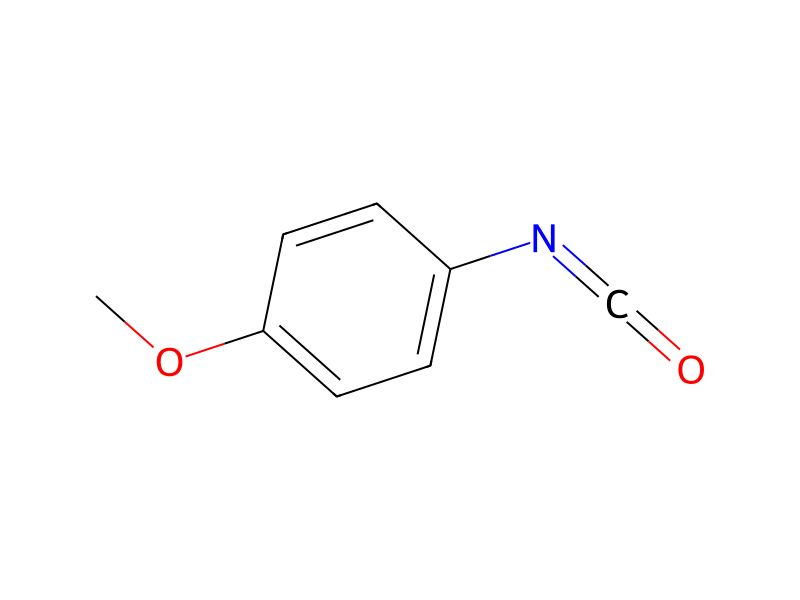
1-Isocyanato-4-methoxybenzene → N-(4-Methoxyphenyl)-3-(2-morpholinoethoxy)-1-pyrrolidinecarboxamide
Reaction equation

[CH3:1][O:2][C:3]1[CH:8]=[CH:7][C:6]([N:9]=[C:10]=[O:11])=[CH:5][CH:4]=1.[O:12]1[CH2:17][CH2:16][N:15]([CH2:18][CH2:19][O:20][CH:21]2[CH2:25][CH2:24][NH:23][CH2:22]2)[CH2:14][CH2:13]1>C1C=CC=CC=1>[CH3:1][O:2][C:3]1[CH:4]=[CH:5][C:6]([NH:9][C:10]([N:23]2[CH2:24][CH2:25][CH:21]([O:20][CH2:19][CH2:18][N:15]3[CH2:14][CH2:13][O:12][CH2:17][CH2:16]3)[CH2:22]2)=[O:11])=[CH:7][CH:8]=1Participants
4
Reactant 2

Product 1

Reagents, catalysts & solvents 1

Procedure
Under anhydrous conditions 2.2 g. p-methoxyphenyl isocyanate in 10 ml. of reagent grade benzene was added dropwise to a stirring solution of 3.0 g. (0.15 mole) of 3-(2-morpholinoethoxy) pyrrolidine in 40 ml. of reagent grade benzene. After the addition was complete the reaction mixture was stirred overnight at room temperature and then concentrated at reduced pressure to give the theoretical yield of crude product, which would not crystallize nor form addition salts. The crude product was chromatographed on a column of magnesium silicate to give 1.4 g. of oily product. The nuclear magnetic resonance spectrum and mass spectrum analysis agreed with the proposed structure.
Workup
- additionAfter the addition
- concentrationconcentrated at reduced pressure
- customto give the theoretical yield of crude product, which would not
- customcrystallize
- customform
- additionaddition salts
- customThe crude product was chromatographed on a column of magnesium silicate
- customto give 1.4 g
Sources & evidence
- ORD record
- ord-8c398cf1c8fd49efbd33fa2aab672f2a
- Source dataset
- uspto-grants-1979_02
- Patent number
- US04139620
Reaction notes
Loading…