Pyridine → HCID 58724547, compound
Reaction equation

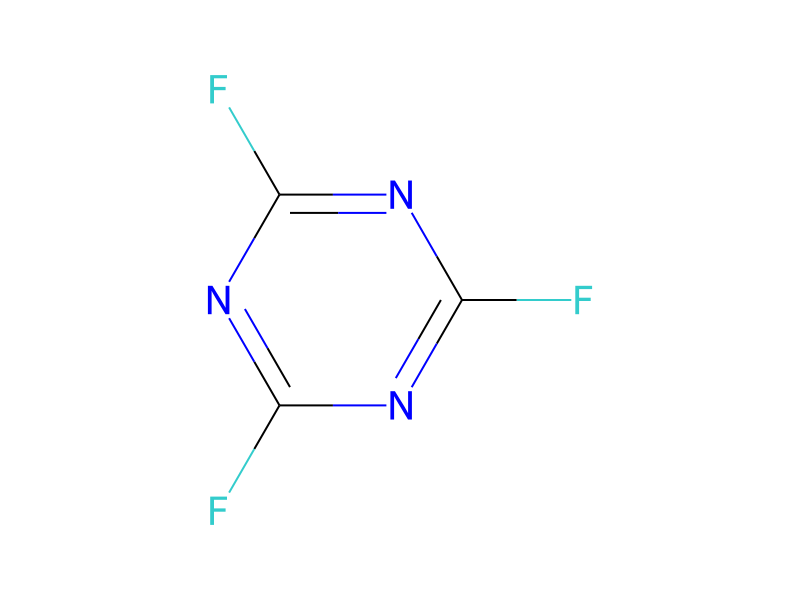
[CH3:1][N:2]1[C:6]([N:7]2[CH:11]=[CH:10][CH:9]=[CH:8]2)=[C:5]([C:12]([OH:14])=O)[CH:4]=[N:3]1.N1C=CC=CC=1.N1C(F)=NC(F)=NC=1[F:23]>ClCCl>[CH3:1][N:2]1[C:6]([N:7]2[CH:11]=[CH:10][CH:9]=[CH:8]2)=[C:5]([C:12]([F:23])=[O:14])[CH:4]=[N:3]1Participants
5
Reactant 3


Product 1

Reagents, catalysts & solvents 1

Procedure
To a stirred solution of 1-methyl-5-pyrrol-1-yl-1H-pyrazole-4-carboxylic acid (7.65 g, 40 mmol) in dry dichloromethane (150 mL) and pyridine (3.2 mL, 40 mmol) under a nitrogen atmosphere was added cyanuric fluoride (5.4 g, 40 mmol) at 0° C. The reaction mixture was stirred for two hours during which time the reaction temperature was allowed to rise to room temperature. Crushed ice was then added along with additional dichloromethane. The organic layer was separated and the aqueous layer was extracted twice with dichloromethane. Concentration of the combined organic layers under reduced pressure gave 1-methyl-5-pyrrol-1-yl-1H-pyrazole-4-carbonyl fluoride which was used in the next step without further purification.
Workup
- customto rise to room temperature
- customThe organic layer was separated
- extractionthe aqueous layer was extracted twice with dichloromethane
Sources & evidence
- ORD record
- ord-dde0e4045b7648f1953776d2217ab9d5
- Source dataset
- uspto-grants-2008_03
- Patent number
- US07345058B2
Reaction notes
Loading…