5-Isocyanato-1,3-dioxaindane → 1-Benzo[1,3]dioxol-5-yl-3-(4-benzoxazol-2-yl-pyridin-2-yl)-urea
Reaction equation

[O:1]1[C:5]2[CH:6]=[CH:7][CH:8]=[CH:9][C:4]=2[N:3]=[C:2]1[C:10]1[CH:15]=[CH:14][N:13]=[C:12]([NH2:16])[CH:11]=1.[CH2:17]1[O:25][C:24]2[CH:23]=[CH:22][C:21]([N:26]=[C:27]=[O:28])=[CH:20][C:19]=2[O:18]1>N1C=CC=CC=1>[O:25]1[C:24]2[CH:23]=[CH:22][C:21]([NH:26][C:27]([NH:16][C:12]3[CH:11]=[C:10]([C:2]4[O:1][C:5]5[CH:6]=[CH:7][CH:8]=[CH:9][C:4]=5[N:3]=4)[CH:15]=[CH:14][N:13]=3)=[O:28])=[CH:20][C:19]=2[O:18][CH2:17]1Participants
4
Reactant 2
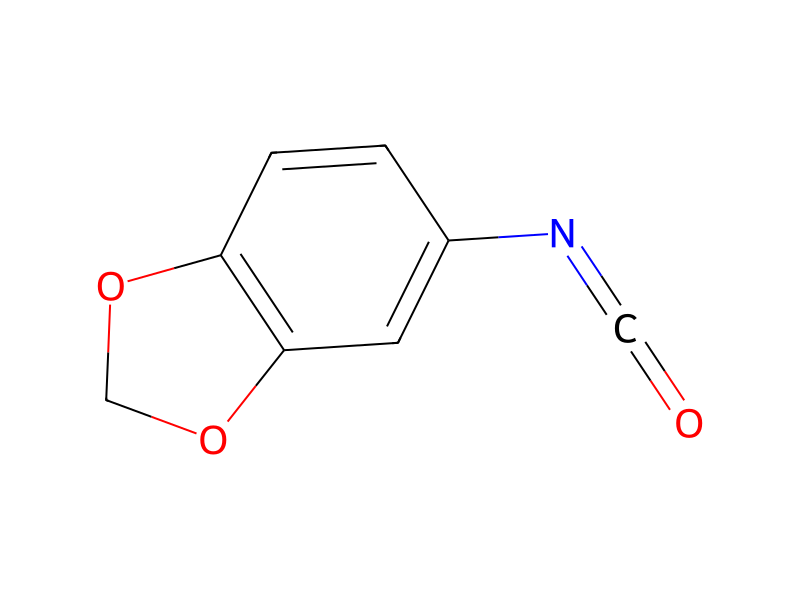

Product 1

Reagents, catalysts & solvents 1

Procedure
A microwave vial was charged with 4-benzoxazol-2-yl-pyridin-2-ylamine (0.05 g, 0.2 mmol), 3,4-(methylenedioxy)phenyl isocyanate (0.04 g, 0.2 mmol) and 1 mL of pyridine. The mixture was subjected to microwave irradiation at 160° C. for 15 minutes. Upon cooling, a precipitate formed. The solid was filtered and then triturated with hot methanol. The undissolved material was filtered, and the precipitate that formed in the mother liquor was filtered and dried to afford the desired product as a white solid. (Calc'd for C20H14N4O4: 374.36, [M+H]+ found: 375.1).
Workup
- customirradiation at 160° C. for 15 minutes
- temperatureUpon cooling
- customa precipitate formed
- filtrationThe solid was filtered
- customtriturated with hot methanol
- filtrationThe undissolved material was filtered
- customthe precipitate that formed in the mother liquor
- filtrationwas filtered
- customdried
Sources & evidence
- ORD record
- ord-575c45a392c94dc5af953e0847980584
- Source dataset
- uspto-grants-2008_03
- Patent number
- US07345178B2
Reaction notes
Loading…