Sodium Dithionite → 5-bromo-N4-ethylpyridine-3,4-diamine
Reaction equation

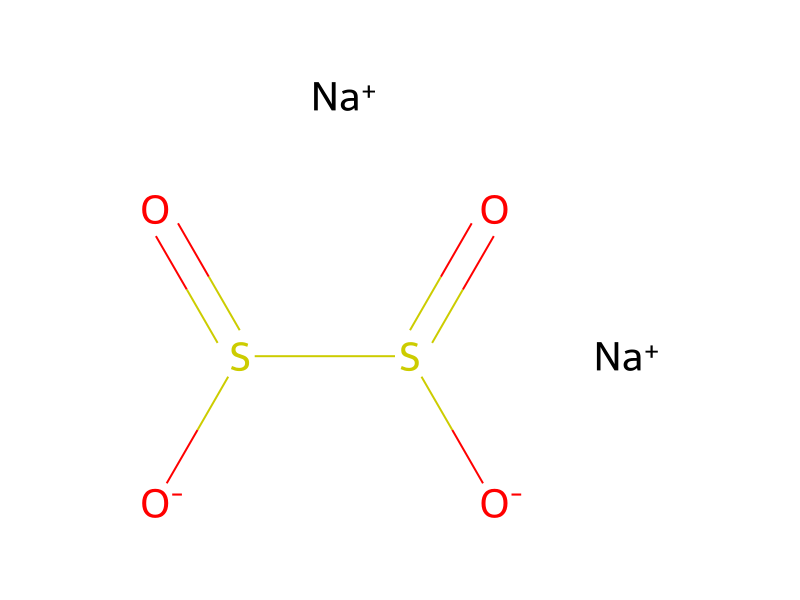
[Br:1][C:2]1[C:3]2[N:10](CC)[C:9]([C:13]3C(N)=NON=3)=[N:8][C:4]=2[CH:5]=[N:6][CH:7]=1.S(S([O-])=O)([O-])=O.[Na+].[Na+]>C(O)C.O.ClCCl>[Br:1][C:2]1[C:3]([NH:10][CH2:9][CH3:13])=[C:4]([NH2:8])[CH:5]=[N:6][CH:7]=1Participants
6





Procedure
A solution of the product of Step 1 (0.5 g, 2 mmol) in ethanol (8 ml)/water (10 ml) was stirred at 60° C. and sodium dithionite (2.12 g, 12.2 mmol) was added protionwise. After 10 minutes the mixture was cooled to room temperature, and diluted with water and dichloromethane. The organic phase was dried and evaporated in vacuo, the residue was used directly in the next reaction; 1H NMR (DMSO-d6) 7.76 (1H, s), 7.75 (1H, s), 5.0 (2H, br), 4.46 (1H, t, J=9.6 Hz), 3.26 (2H, m), 1.06 (3H, t, J=7.2 Hz).
Workup
- customThe organic phase was dried
- customevaporated in vacuo
- customthe residue was used directly in the next reaction
Sources & evidence
- ORD record
- ord-5702a78cb4e9455da3f029b1ab817159
- Source dataset
- uspto-grants-2008_03
- Patent number
- US07348339B2
Reaction notes
Loading…