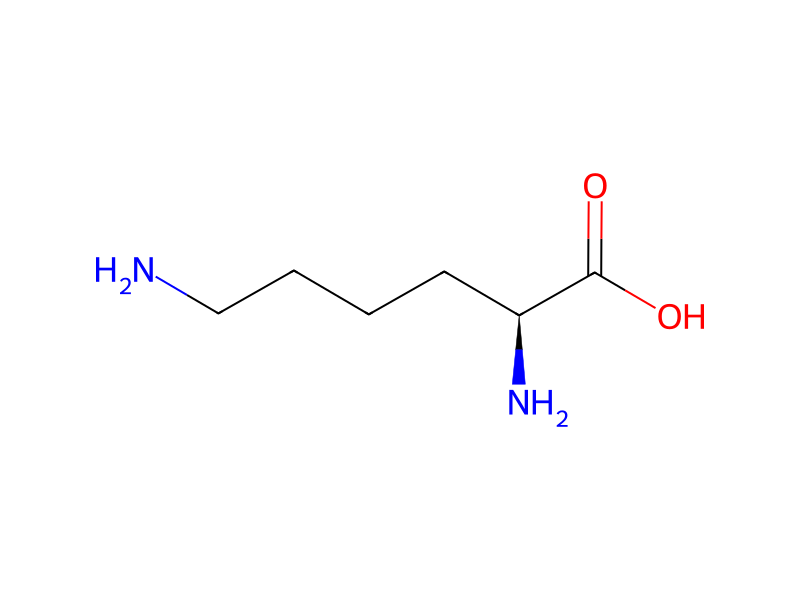
L-Lysine → Citric Acid
Reaction equation

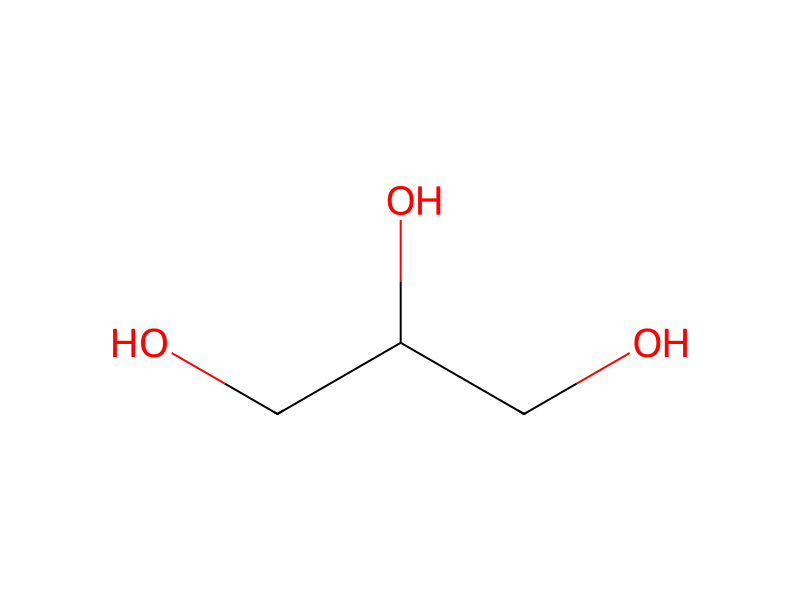
N[C@H]([C:8]([OH:10])=[O:9])CCCCN.N[C@H:12]([C:18]([OH:20])=[O:19])[CH2:13][CH2:14][C:15](=[O:17])[OH:16].N[C@H](C(O)=[O:31])CCCNC(=N)N>OCC(CO)O>[C:15]([OH:16])(=[O:17])[CH2:14][C:13]([CH2:12][C:18]([OH:20])=[O:19])([C:8]([OH:10])=[O:9])[OH:31]Participants
Reactant 3


Product 1

Reagents, catalysts & solvents 1
Procedure
“Plasmin”, also known as fibrinolysin or lysofibrin, is a serine-type protease which results from the activation of the zymogen plasminogen. Activation is the result of a proteolytic cleavage between amino acids 561 and 562 (numbering relative to human Glu-plasminogen). Plasmin carries a heavy chain comprising 5 kringle domains and a light chain comprising the catalytic domain. Plasminogen can be enriched from blood plasma, e.g., via lysine affinity-chromatography (Deutsch & Mertz, 1970, Science 170, 1095-1096). Truncation of the plasmin molecule is possible as long as the catalytic domain remains functional, such truncation thus results in the formation of an “active truncated variant” of plasmin. As such, one or more of the 5 kringle domains can be deleted wholly or partially. Truncated plasmins lacking one or more kringle domains and/or lacking parts of one or more kringle domains therefore are envisaged by the current invention. Examples of truncated variants of plasmin include, but are not limited to, “midiplasmin”, “miniplasmin”, “microplasmin”, and “delta-plasmin”. Midiplasmin is basically lacking kringle domains 1 to 3 (e.g. Christensen et al., 1995, Biochem J 305, 97-102). Miniplasmin was originally obtained by limited digestion of plasmin with elastase and is basically lacking kringle domains 1 to 4 (e.g. Christensen et al., 1979, Biochim Biophys Acta 567, 472-481; Powell & Castellino, 1980, J Biol Chem 255, 5329). Miniplasmin has subsequently been produced recombinantly (WO 2002/050290). Microplasmin was originally obtained by incubation of plasmin at elevated pH and is basically lacking all kringle domains (e.g. WO 89/01336). Whereas the microplasmin obtained from incubation of plasmin at elevated pH is containing the 30-31 carboxy-terminal amino acids of the heavy chain, a recombinantly produced microplasmin variant contains the 19 carboxy-terminal amino acids of the heavy chain (WO 2002/050290). Delta-plasmin is a recombinant version of plasmin in which kringle domain 1 is linked directly with the catalytic domain (WO 2005/105990). The above described truncated variants of plasmin are obtained by activation of “midiplasminogen”, “miniplasminogen”, “microplasminogen” and “delta-plasminogen”, respectively. In order to be activatable, a truncated plasminogen needs to comprise a minimum number of amino acids of the linker between the kringle 5 domain and the catalytic domain (see, e.g., Wang et al., 1995, Protein Science 4, 1758-1767). As alternative to plasmin or an active truncated variant thereof, an activatable plasminogen or an activatable truncated variant thereof can be used in the context of the current invention (see, e.g. EP 0480906; U.S. Pat. No. 5,304,383; EP 0631786; U.S. Pat. No. 5,520,912; U.S. Pat. No. 5,597,800; U.S. Pat. No. 5,776,452). “Plasminogen” refers to any form of plasminogen e.g. Glu-plasminogen or Lys-plasminogen (starting with Arg at position 68 or Lys at positions 77 or 78). When using activatable plasminogen or an activatable truncated variant thereof, the activation to plasmin may be delayed and will occur after contacting it with an organ, tissue or body fluid. In yet another alternative, the plasmin or an active truncated variant thereof can be substituted in the context of the current invention for an activatable plasminogen or an activatable truncated variant thereof in conjunction with a plasminogen activator (such as tissue plasminogen activator (tPA), urokinase, streptokinase or staphylokinase; see, e.g. U.S. Pat. No. 6,733,750; U.S. Pat. No. 6,585,972; U.S. Pat. No. 6,899,877; WO 03/33019). In yet a further alternative, a mixture of any of (i) plasmin or an active truncated variant thereof, (ii) activatable plasminogen or an activatable truncated variant thereof, and (iii) a plasminogen activator can be used in the context of the current invention (see, e.g. US 2004/0081643). In order to ensure stability of the plasmin (or plasminogen), it will generally be stored at lowered temperatures (e.g. 4 degrees Celsius or −20 degrees Celsius) in a stabilizing composition such as low pH (pH 4 or lower; obtained by e.g. 1 mM to 250 mM of an acid such as citric acid, see, e.g. Castellino & Sodetz, 1976, Methods Enzymol 45, 273-286; WO 01/36608; WO 01/36609; WO 01/36611) or high glycerol content (30-50% v/v, e.g., Castellino & Sodetz, 1976, Methods Enzymol 45, 273-286), alternatively in or in conjunction with one or more further stabilizers such as an amino acid (e.g. lysine or an analogue thereof), a sugar (e.g. mannitol) or any stabilizer as known in the art (e.g. dipeptides, WO 97/01631). Further included in the genus “plasmin” is any active derivative thereof (or of an active truncated plasmin variant), or similar derivative of activatable plasminogen (or of activatable truncated variant thereof). Such derivates include e.g. labeled plasmin or plasminogen (or truncated variants thereof) such as Tc99-labeled plasmin (Deacon et al., 1980, Br J Radiol 53, 673-677) or pegylated or acylated plasmin or plasminogen (or truncated variants thereof; EP 9879, WO 93/15189). Said derivatives further include hybrid or chimeric plasmin or plasminogen molecules comprising e.g. a truncated plasmin or plasminogen according to the invention fused with e.g. a fibrin-binding molecule (such as kringle 2 of tPA, an apolipoprotein kringle, the finger domain of tPA or fibronectin and the Fab domain of a fibrin-binding antibody).
Workup
- customsuch truncation thus results in the formation of an “active truncated variant” of plasmin
- customMiniplasmin was originally obtained by limited digestion of plasmin with elastase and
- customMiniplasmin has subsequently been produced recombinantly (WO 2002/050290)
- customMicroplasmin was originally obtained by incubation of plasmin at elevated pH
- customWhereas the microplasmin obtained from incubation of plasmin at elevated pH
- additionis containing the 30-31 carboxy-terminal amino acids of the heavy chain
- customare obtained by activation of “midiplasminogen”, “miniplasminogen”, “microplasminogen” and “delta-plasminogen”
- customtemperatures (e.g. 4 degrees Celsius or −20 degrees Celsius)
Sources & evidence
- ORD record
- ord-2e27717b29ae4955904479eba8b84006
- Source dataset
- uspto-grants-2014_12
- Patent number
- US08920794B2
Reaction notes
Loading…