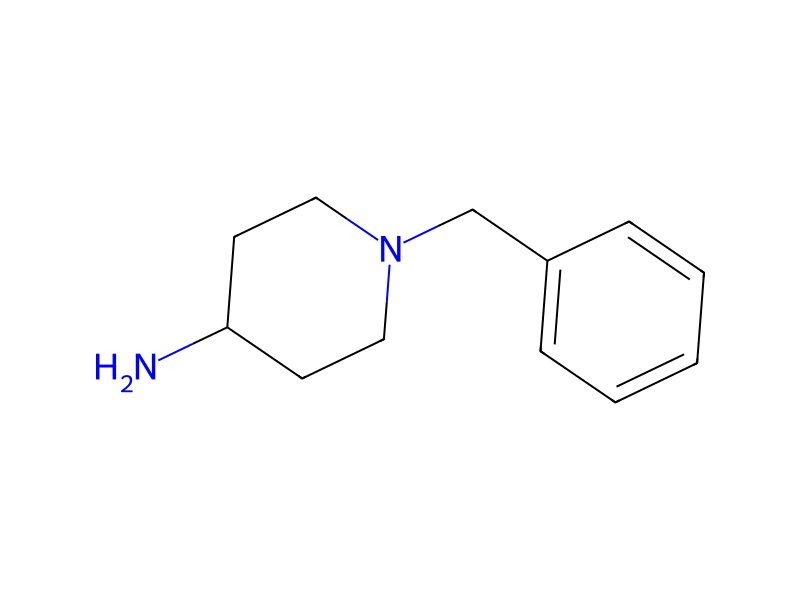
1-Benzyl-4-piperidylamine → HCID 20544688, compound
Reaction equation

[CH2:1]([N:8]1[CH2:13][CH2:12][CH:11]([NH2:14])[CH2:10][CH2:9]1)[C:2]1[CH:7]=[CH:6][CH:5]=[CH:4][CH:3]=1.[O:15]1[C:20]2[CH:21]=[CH:22][CH:23]=[C:24]([C:25]([Cl:27])=[O:26])[C:19]=2[O:18][CH2:17][CH2:16]1>C(Cl)(Cl)Cl>[ClH:27].[CH2:1]([N:8]1[CH2:13][CH2:12][CH:11]([NH:14][C:25]([C:24]2[C:19]3[O:18][CH2:17][CH2:16][O:15][C:20]=3[CH:21]=[CH:22][CH:23]=2)=[O:26])[CH2:10][CH2:9]1)[C:2]1[CH:3]=[CH:4][CH:5]=[CH:6][CH:7]=1Participants
4
Reactant 2

Product 1

Reagents, catalysts & solvents 1

Procedure
200 ml of chloroform and 50 g of 1-benzyl-4-amino piperidine were introduced into a balloon flask provided with an agitator and a thermometer, and then 50 g of 1,4-benzodioxane-5-carbonyl chloride was added in portions at a temperature of from 5°-10° C. After agitation of the mixture at ambient temperature the solvent was removed under vacuum and the residue was dissolved in 300 ml of water. After precipitation of the base by addition of ammonia, the water was removed and the resulting product was treated with a solution of hydrochloric acid, 75 g of N-(1-benzyl-4-piperidyl)-1,4-benzodioxane-5-carboxamide hydrochloride was produced (M.P.: 205° C.; yield: 77%).
Workup
- customprovided with an agitator
- customAfter agitation of the mixture at ambient temperature the solvent was removed under vacuum
- dissolutionthe residue was dissolved in 300 ml of water
- customAfter precipitation of the base
- additionby addition of ammonia
- customthe water was removed
- additionthe resulting product was treated with a solution of hydrochloric acid
Sources & evidence
- ORD record
- ord-25d523e827c6429d92cabbf3bfa322a9
- Source dataset
- uspto-grants-1981_02
- Patent number
- US04248885
Reaction notes
Loading…