Butanal → 1,1-Dibutoxybutane
Reaction equation

[CH:1](=[O:5])[CH2:2][CH2:3][CH3:4]>FC(F)(F)C([O-])=O.[Ru+3].FC(F)(F)C([O-])=O.FC(F)(F)C([O-])=O>[CH2:1]([O:5][CH:1]([O:5][CH2:1][CH2:2][CH2:3][CH3:4])[CH2:2][CH2:3][CH3:4])[CH2:2][CH2:3][CH3:4]Participants
3
Reactant 1
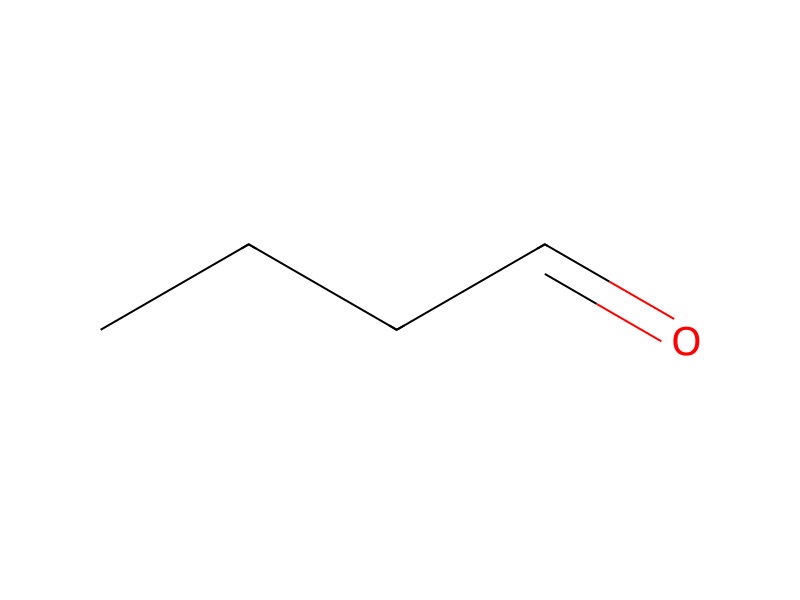
Product 1

Reagents, catalysts & solvents 1

Procedure
Example 3 is repeated, while replacing ruthenium chloride with ruthenium trifluoroacetate, the other conditions of the example being unchanged. 13.8 m.moles butanal and 32 m.moles 1,1-dibutoxybutane have been formed.
Sources & evidence
- ORD record
- ord-a96c9cc5d05144e38c9e41138f3e6955
- Source dataset
- uspto-grants-1981_02
- Patent number
- US04250121
Reaction notes
Loading…