2-Amino-5-chlorobenzoic acid → 8-Chloro-10-oxo-10H-pyridazino[6,1-b]quinazoline-2-carboxylic acid
Reaction equation

[Cl:1][C:2]1[CH:10]=[C:6]([C:7]([OH:9])=O)[C:5]([NH2:11])=[CH:4][CH:3]=1.Cl[C:13]1[N:18]=[N:17][C:16]([C:19]([OH:21])=[O:20])=[CH:15][CH:14]=1>C(O)(=O)C>[Cl:1][C:2]1[CH:3]=[CH:4][C:5]2[N:11]=[C:13]3[CH:14]=[CH:15][C:16]([C:19]([OH:21])=[O:20])=[N:17][N:18]3[C:7](=[O:9])[C:6]=2[CH:10]=1Participants
4
Reactant 2
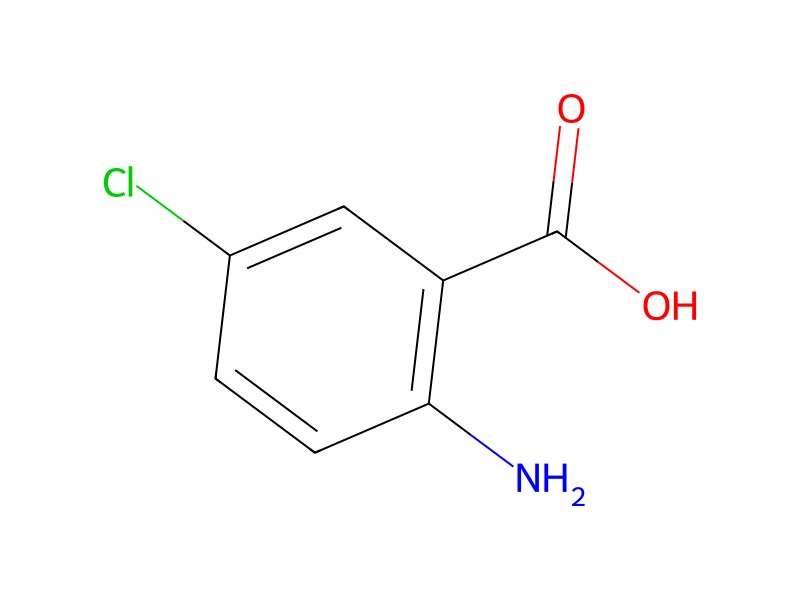

Product 1

Reagents, catalysts & solvents 1

Procedure
A mixture of 5-chloroanthranilic acid (5.4 g, 31.6 mmol) and 6-chloropyridazine-3-carboxylic acid (5.0 g, 31.6 mmol) is heated at reflux in acetic acid (50 ml) for 80 hrs. The mixture is cooled and the precipitate which formes is collected to give 4.73 g of crude product, m.p. 253°-300° C. (dec.). Recrystallization of this material from pyridine gives the analytical material, m.p. 260°-262° C.
Workup
- temperatureis heated
- temperatureThe mixture is cooled
- customthe precipitate which formes is collected
Sources & evidence
- ORD record
- ord-82580a6fdd044ba4a9c07381fd01330b
- Source dataset
- uspto-grants-1981_02
- Patent number
- US04250177
Reaction notes
Loading…