Phthalic Anhydride → Benzoic acid, 2-[(1-butyl-2-methyl-1H-indol-3-yl)carbonyl]-
Reaction equation

[C:1]1(=[O:11])[O:6][C:4](=[O:5])[C:3]2=[CH:7][CH:8]=[CH:9][CH:10]=[C:2]12.[CH2:12]([N:16]1[C:24]2[C:19](=[CH:20][CH:21]=[CH:22][CH:23]=2)[CH:18]=[C:17]1[CH3:25])[CH2:13][CH2:14][CH3:15].[Cl-].[Al+3].[Cl-].[Cl-]>C1C=CC=CC=1>[CH2:12]([N:16]1[C:24]2[C:19](=[CH:20][CH:21]=[CH:22][CH:23]=2)[C:18]([C:4]([C:3]2[CH:7]=[CH:8][CH:9]=[CH:10][C:2]=2[C:1]([OH:6])=[O:11])=[O:5])=[C:17]1[CH3:25])[CH2:13][CH2:14][CH3:15]Participants
5
Reactant 3
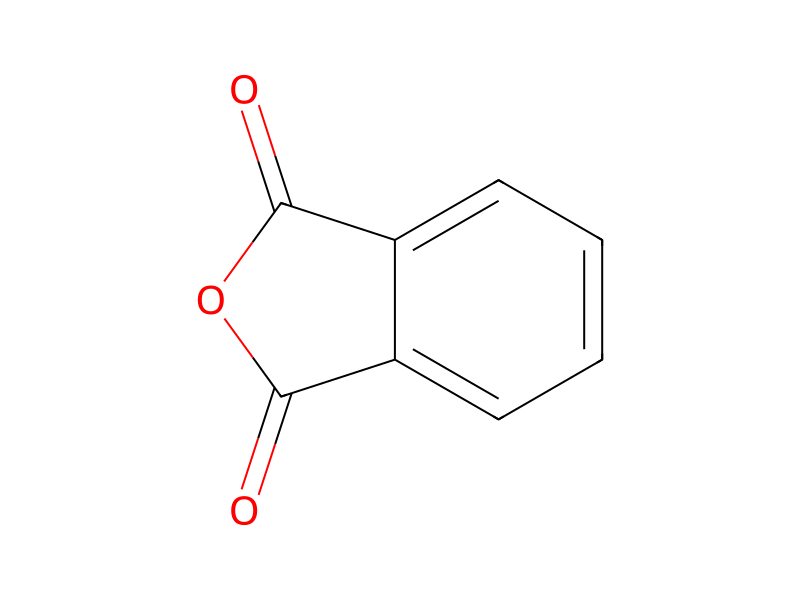


Product 1

Reagents, catalysts & solvents 1

Procedure
Following the procedure described in part A of Example 1, 7.4 g (0.05 mole) of phthalic anhydride, 16.0 g (0.07 mole) of 79 percent active 1-n-butyl-2-methylindole and 13.3 g (0.01 mole) of aluminum chloride were interacted in 50 ml of benzene to obtain 2-[(1-n-butyl-2-methyl-3-indolyl)carbonyl]benzoic acid (Formula VIII: R0 =R1 =R2 =R3 =Y1 =H; R5 =CH3 ; R6 =(CH2)3CH3) a pale pink solid melting over the range 88°-92° C. The nuclear magnetic resonance spectrum was consistent with the structure. Infrared maxima were recorded at 1720 cm-1 (C=O; s) and 1700 cm-1 (C=O; s).
Sources & evidence
- ORD record
- ord-361724983eba4e5cb2d266cd3c7b370a
- Source dataset
- uspto-grants-1981_02
- Patent number
- US04251446
Reaction notes
Loading…