Pyridine → HCID 12948391, compound
Reaction equation

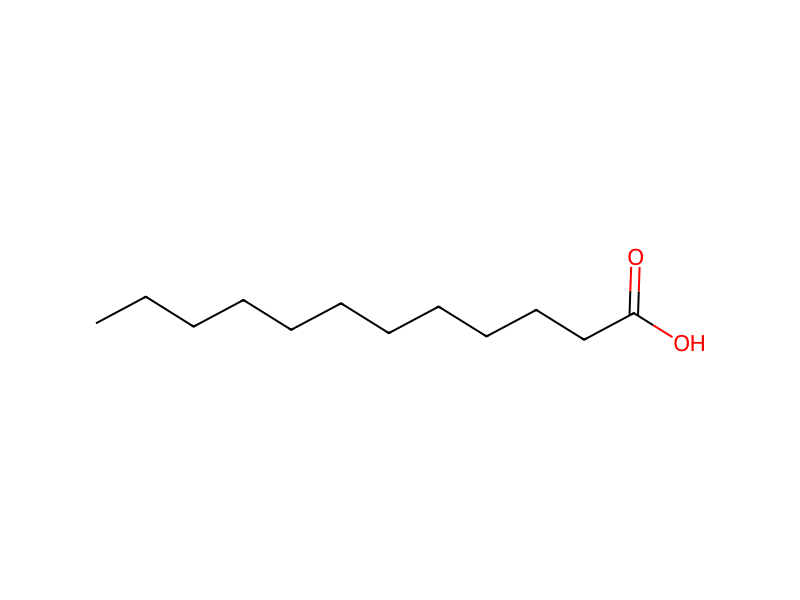
[C:1]([NH:10][NH2:11])(=[O:9])[C:2]1[C:3](=[CH:5][CH:6]=[CH:7][CH:8]=1)[OH:4].[C:12](O)(=[O:24])[CH2:13][CH2:14][CH2:15][CH2:16][CH2:17][CH2:18][CH2:19][CH2:20][CH2:21][CH2:22][CH3:23].N1C=CC=CC=1.S(Cl)(Cl)=O>ClC1C=CC=CC=1>[C:1]([NH:10][NH:11][C:12](=[O:24])[CH2:13][CH2:14][CH2:15][CH2:16][CH2:17][CH2:18][CH2:19][CH2:20][CH2:21][CH2:22][CH3:23])(=[O:9])[C:2]1[C:3](=[CH:5][CH:6]=[CH:7][CH:8]=1)[OH:4]Participants
6
Reactant 4



Product 1

Reagents, catalysts & solvents 1

Procedure
15.2 g (0.1 mol) of salicylic acid hydrazide and 20.0 g (0.1 mol) of lauric acid are suspended in 200 ml of chlorobenzene, 2.0 g (0.025 mol) of pyridine are added and the mixture is heated to the boil. 13.1 g (0.11 mol) of thionyl chloride are added dropwise at this temperature. The product separates out initially as a turbidity and then as a flocculent precipitate. After boiling for 1 hour the mixture is cooled and the product is filtered off and washed with a little benzene and then with petroleum ether. N-Salicyloyl-N'-lauroyl-hydrazine of melting point 158° C is thus obtained in a yield of 53%. The product can be recrystallised from ethylene glycol monomethyl ether.
Workup
- temperaturethe mixture is heated to the boil
- temperaturethe mixture is cooled
- filtrationthe product is filtered off
- washwashed with a little benzene
Sources & evidence
- ORD record
- ord-fc6fb0b9dde640f1bf18744b978b8f55
- Source dataset
- uspto-grants-1977_01
- Patent number
- US04002680
Reaction notes
Loading…