Methylhydrazine → 2-(3-trifluoromethylphenyl)-5-(2-isopropylidenehydrazino)-pyridazin-3(2H)-one
Reaction equation

Cl[C:2]1[CH:7]=[N:6][N:5]([C:8]2[CH:13]=[CH:12][CH:11]=[C:10]([C:14]([F:17])([F:16])[F:15])[CH:9]=2)[C:4](=[O:18])[CH:3]=1.[CH3:19][C:20](=[N:22][NH2:23])[CH3:21].CNN>>[F:15][C:14]([F:17])([F:16])[C:10]1[CH:9]=[C:8]([N:5]2[C:4](=[O:18])[CH:3]=[C:2]([NH:23][N:22]=[C:20]([CH3:21])[CH3:19])[CH:7]=[N:6]2)[CH:13]=[CH:12][CH:11]=1Participants
4
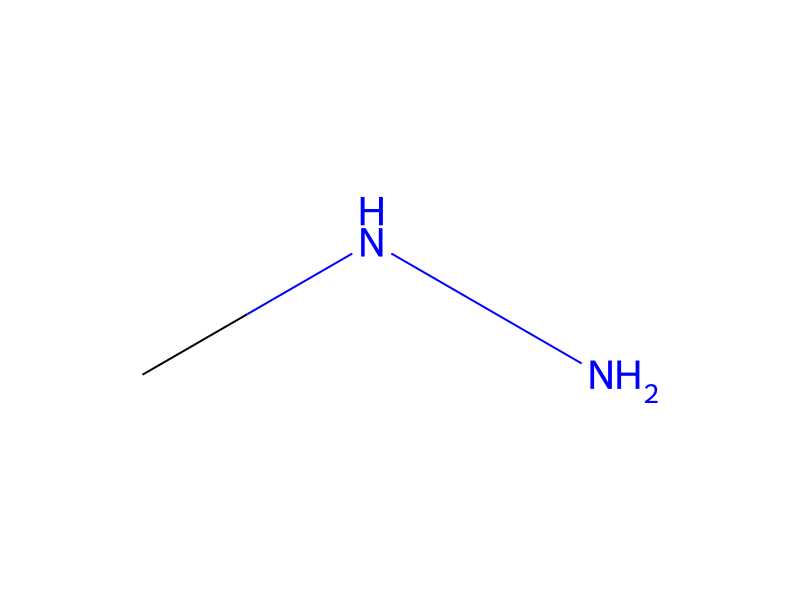


Procedure
Following essentially the same procedure as in example 2, but using an equivalent amount of 5-chloro-2-(3-trifluoromethylphenyl)-pyridazin-3(2H)-one and acetone hydrazone in place of the 4,5-dichloro-2-(3-trifluoromethylphenyl)-pyridazin-3(2H)-one and methylhydrazine used therein, there is obtained 2-(3-trifluoromethylphenyl)-5-(2-isopropylidenehydrazino)-pyridazin-3(2H)-one, (m.p. 255° to 257° C).
Sources & evidence
- ORD record
- ord-4dd74391875146b6b0a1249276c3af10
- Source dataset
- uspto-grants-1977_01
- Patent number
- US04002751
Reaction notes
Loading…