Ammonia → 2-Methyl-N-(2-methylpropylidene)-1-propanamine
Reaction equation

[CH:1](=O)[CH:2]([CH3:4])[CH3:3].[H][H].[NH3:8]>[Ni]>[CH:1](=[N:8][CH2:1][CH:2]([CH3:4])[CH3:3])[CH:2]([CH3:4])[CH3:3]Participants
5
Reactant 3

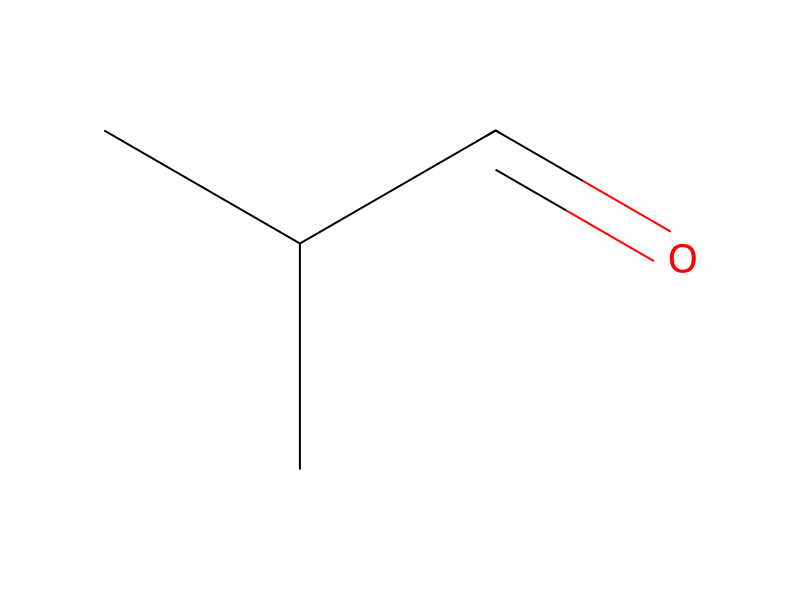

Product 1

Reagents, catalysts & solvents 1

Conditions
- Temperature
- -15 °C
Procedure
1000g isobutyraldehyde and about 100 g of a commercially available nickel containing carrier catalyst (containing about 52 to 53% by weight nickel, and employing chromium (3)-oxide as activator) are introduced into a 2 l three-necked flask, equipped with a gas inlet tube, a stirrer and a reflux condensor, and cooled to -15° C. Hydrogen and ammonia are introduced into the resulting suspension in a volume ratio of 1 : 1 and at a temperature of 90° C. 160 l of gas are introduced per hour. Altogether, 240 l hydrogen and 240 l gaseous ammonia are introduced. After termination of the reaction, the catalyst is separated by filtration. 889 g isobutylidene -- isobutylamine are obtained.
Workup
- additionare introduced into a 2 l three-necked flask
- customequipped with a gas inlet tube, a stirrer
- customAfter termination of the reaction
- customthe catalyst is separated by filtration
Sources & evidence
- ORD record
- ord-4b424334f7f34067b02091a588876cb7
- Source dataset
- uspto-grants-1977_01
- Patent number
- US04003921
Reaction notes
Loading…