Ammonia → 6-Aminohexanoic Acid
Reaction equation

[NH2:1][CH2:2][CH2:3][CH2:4][CH2:5][CH2:6][C:7]([OH:9])=[O:8].N>C(O)C.[Ni]>[NH2:1][CH2:2][CH2:3][CH2:4][CH2:5][CH2:6][C:7]([OH:9])=[O:8].[C:7]1(=[O:9])[NH:1][CH2:2][CH2:3][CH2:4][CH2:5][CH2:6]1Participants
Reactant 2


Product 2
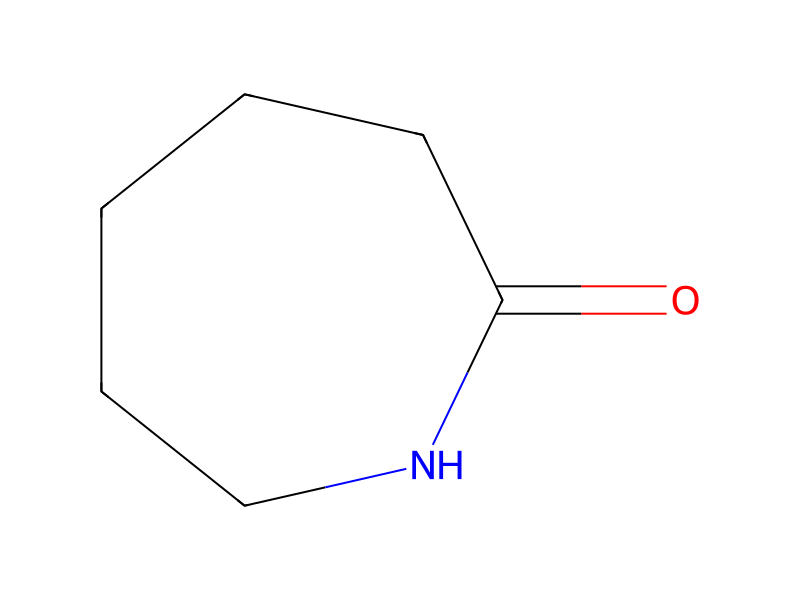
Reagents, catalysts & solvents 2


Procedure
No prior art has been found which describes the hydrogenation of ammonium salts of aliphatic ω-nitrilecarboxylic acids in aqueous solution to directly produce the corresponding lactams. In closely related art, U.S. Pat. No. 4,329,498 describes the hydrogenation of muconic acid mononitrile to 6-aminocaproic acid (6-ACA) in dry ethanol saturated with ammonia, using a Raney nickel catalyst #2. After removal of the hydrogenation catalyst, heating the ethanolic solution of 6-ACA to 170° C.-200° C. was expected to result in the cyclization of 6-ACA to caprolactam. The reductive cyclization of either β-quinoxalinylpropanoic acids (E. C. Taylor et al., J. Am. Chem. Soc., (1965), vol. 87. 1984-1990). or the related 2-(2-carboxyethyl)-3(4H)-quinoxalone (E. C. Taylor et al., J. Am. Chem. Soc., (1965). vol. 87. 1990-1995) by hydrogenation in 1 Nsodium hydroxide solution using Raney nickel as the catalyst has been reported to produce the corresponding five-membered ring lactams, but only after removal of the catalyst from the product mixture and acidification of the resulting filtrate. The authors state that for any of these reductions, "lactam formation can only proceed in acidic solution" (page 1992, second paragraph), presumably requiring the presence of the protonated carboxylic acid and not the carboxylate salt. U.S. Pat. No. 4,730,040 discloses a process for the preparation of caprolactam, reacting an aqueous solution of 5-formylvaleric acid with ammonia and hydrogen in the presence of a hydrogenation catalyst, following which ammonia is separated from the product mixture and the resulting solution of 6-ACA is heated to 300° C.
Workup
- customAfter removal of the hydrogenation catalyst
- temperatureheating the ethanolic solution of 6-ACA to 170° C.-200° C.
Sources & evidence
- ORD record
- ord-0752b61d4fc14b08bd514f0ca27b55e7
- Source dataset
- uspto-grants-1999_06
- Patent number
- US05908954
Reaction notes
Loading…