3-Chloro-o-cresol → 3-Hydroxy-2-methylbenzonitrile
Reaction equation

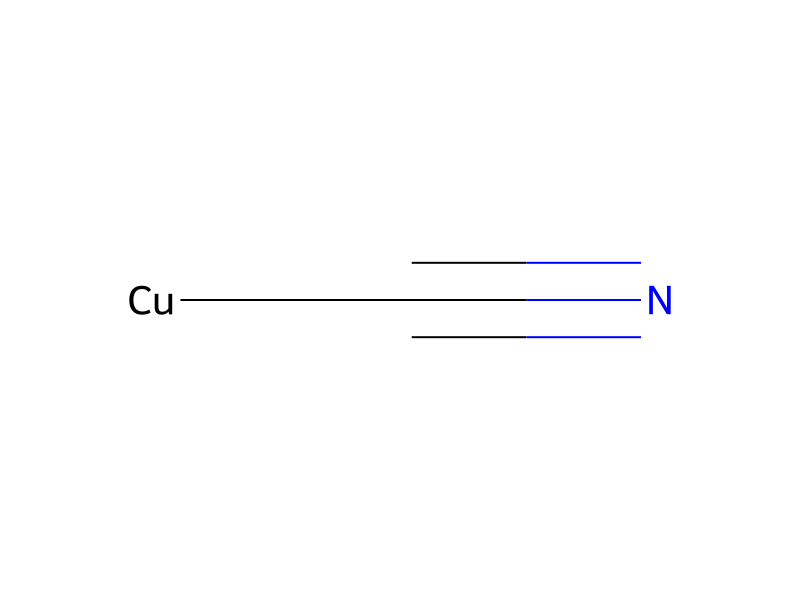
Cl[C:2]1[C:3]([CH3:9])=[C:4]([OH:8])[CH:5]=[CH:6][CH:7]=1.[Cu][C:11]#[N:12]>N1C=CC=CC=1>[OH:8][C:4]1[C:3]([CH3:9])=[C:2]([CH:7]=[CH:6][CH:5]=1)[C:11]#[N:12]Participants
Reactant 2

Product 1

Reagents, catalysts & solvents 1

Procedure
A further process starts from 3-chloro-2-methylphenol (Cresp et al., J. Chem. Soc. Perkin Trans.1, 2435(1974)). This is reacted with copper(I) cyanide in pyridine at boiling heat to give 3-hydroxy-2-methylbenzonitrile. In the second stage, the nitrile is hydrolyzed to 3-hydroxy-2-methylbenzoic acid (2) in 18 hours in a boiling mixture of water, glacial acetic acid and concentrated sulfuric acid. The first stage of this process has the significant disadvantage that very toxic copper(I) cyanide is employed--under the reaction conditions toxic hydrogen cyanide gas can escape from the reaction mixture. Harmful pyridine is employed as a solvent. The reaction is distinguished by difficult working up and a high yield of toxic salts. In the second stage (amide hydrolysis), a very long reaction time is necessary. At the very high reaction temperatures, the acidic reaction medium is very corrosive to the materials customarily employed in chemical plants.
Workup
- temperatureat boiling heat
Sources & evidence
- ORD record
- ord-8ad6a947cfba48ccb9656c52e3aa9098
- Source dataset
- uspto-grants-1999_06
- Patent number
- US05910605
Reaction notes
Loading…