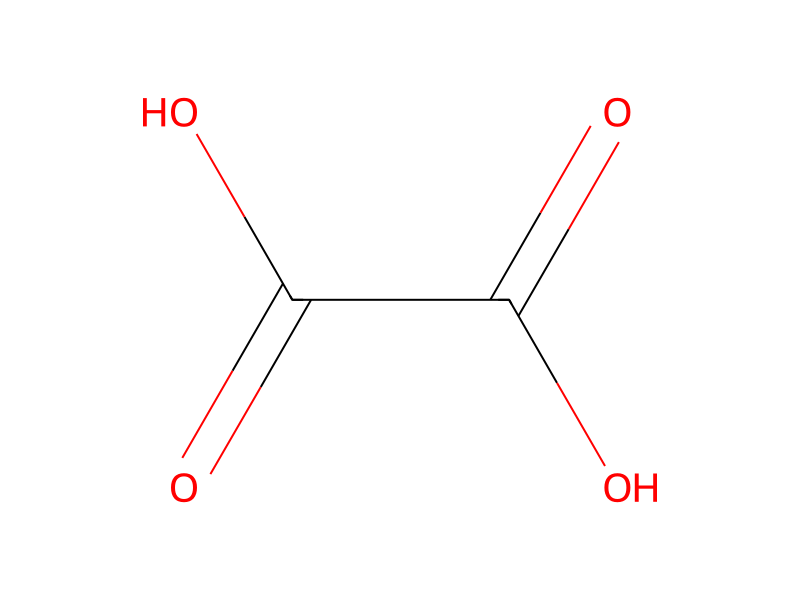
Oxalic Acid → HCID 86754097, compound
Reaction equation

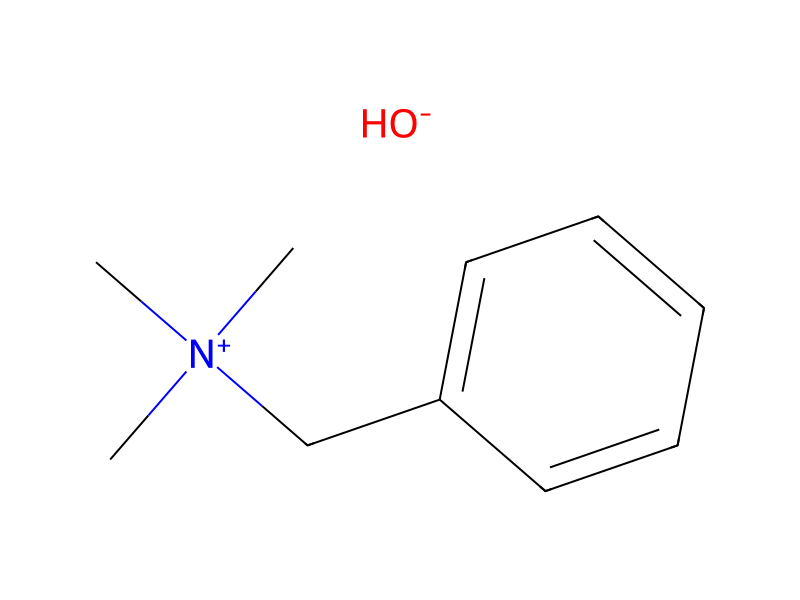
[C:1]([OH:6])(=[O:5])[C:2]([OH:4])=[O:3].[OH-].[CH2:8]([N+:15]([CH3:18])([CH3:17])[CH3:16])[C:9]1[CH:14]=[CH:13][CH:12]=[CH:11][CH:10]=1>CC(C)=O.CO>[C:1]([O-:6])(=[O:5])[C:2]([OH:4])=[O:3].[CH2:8]([N+:15]([CH3:18])([CH3:17])[CH3:16])[C:9]1[CH:14]=[CH:13][CH:12]=[CH:11][CH:10]=1Participants
Reactant 2
Product 1

Reagents, catalysts & solvents 2


Procedure
Oxalic acid in an amount of 21.56 g (0.239 mol) was dissolved in acetone, making a total of 100 g. The resultant solution was mixed with 100 g of 40% by weight solution of benzyltrimethylammonium hydroxide (0.261 mol) in methanol (produced by Tokyo Kasei Kogyo Co., Ltd.), and then 1500 g of acetone was added to the resultant mixture to form white precipitate. Subsequently, the precipitate was collected by means of suction filtration method, dispersed in 500 g of acetone and filtered to collect cake. The resultant cake was subjected to drying treatment under vacuum at 80° C. for 24 hours to form 46.80 g (0.208 mol) of mono(benzyltrimethylammonium) oxalate at a yield of 87.0% based on the fed oxalic acid. The resultant mono(benzyltrimethylammonium) oxalate, which had a melting point of about 130° C. in a stream of nitrogen, was thermally decomposed in a stream of nitrogen at about 230° C. with a latent heat of fusion of about 123 J/g.
Workup
- customto form white precipitate
- filtrationSubsequently, the precipitate was collected by means of suction filtration method
- additiondispersed in 500 g of acetone
- filtrationfiltered
- customto collect cake
- customto drying treatment under vacuum at 80° C. for 24 hours
Sources & evidence
- ORD record
- ord-fa4103df625b490f8a26a09c147542d3
- Source dataset
- uspto-grants-1999_06
- Patent number
- US05911099
Reaction notes
Loading…