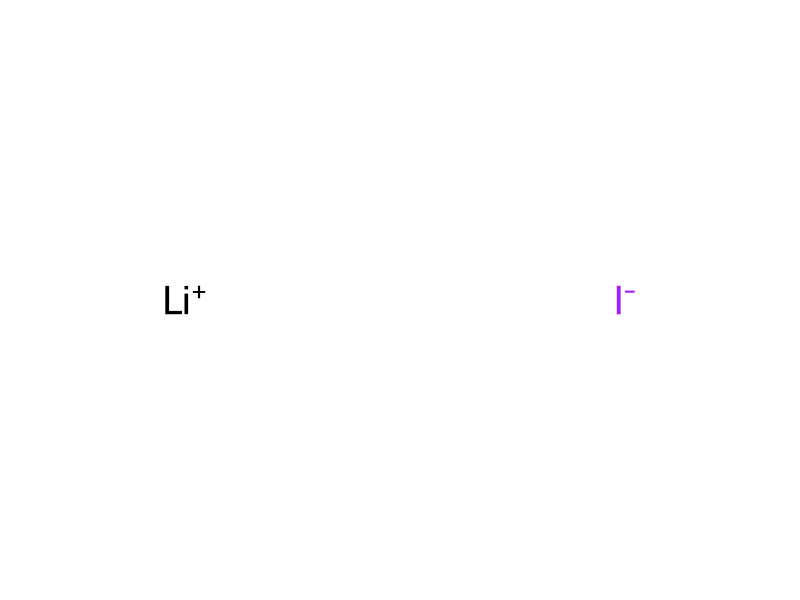
Lithium iodide → 6-(4-hydroxyphenyl)thio-2,2,3-trimethyl-2H-benzo[b]pyran
Reaction equation

C[O:2][C:3]1[CH:8]=[CH:7][C:6]([S:9][C:10]2[CH:22]=[CH:21][C:13]3[O:14][C:15]([CH3:20])([CH3:19])[C:16]([CH3:18])=[CH:17][C:12]=3[CH:11]=2)=[CH:5][CH:4]=1.[I-].[Li+]>N1C(C)=CC(C)=CC=1C.ClCCl>[OH:2][C:3]1[CH:4]=[CH:5][C:6]([S:9][C:10]2[CH:22]=[CH:21][C:13]3[O:14][C:15]([CH3:19])([CH3:20])[C:16]([CH3:18])=[CH:17][C:12]=3[CH:11]=2)=[CH:7][CH:8]=1Participants




Procedure
6-(4-Methoxyphenyl)thio-2,2,3-trimethyl-2H-benzo[b]pyran (7.816 g) (see Preparation 5) was dissolved in dry 2,4,6-collidine (30 ml), anhydrous lithium iodide (10.04 g) was added and the mixture was heated under reflux under.a nitrogen atmosphere for 48 hours. A further portion of lithium iodide (9.06. g) was then added and heating was continued for another 72 hours. After cooling, the mixture was taken up in dichloromethane and washed with 2N aqueous hydrochloric acid solution (×3). The organic layer was separated, dried (anhydrous sodium sulphate), the solvent removed under reduced pressure and the residue was chromatographed on silica using dichloromethane as the eluent to yield 6-(4-hydroxyphenyl)thio-2,2,3-trimethyl-2H-benzo[b]pyran (5.799 g) as an oil.
Workup
- temperaturethe mixture was heated
- temperatureunder reflux under.a nitrogen atmosphere for 48 hours
- temperatureheating
- temperatureAfter cooling
- washwashed with 2N aqueous hydrochloric acid solution (×3)
- customThe organic layer was separated
- dry with materialdried (anhydrous sodium sulphate)
- customthe solvent removed under reduced pressure
- customthe residue was chromatographed on silica
Sources & evidence
- ORD record
- ord-a2eb95c7ed4340b985e636263d4b6c51
- Source dataset
- uspto-grants-1999_06
- Patent number
- US05912244
Reaction notes
Loading…