Lithium iodide → 6-(2-hydroxyphenyl)thio-2,2,3-trimethyl-2H-benzo[b]pyran
Reaction equation

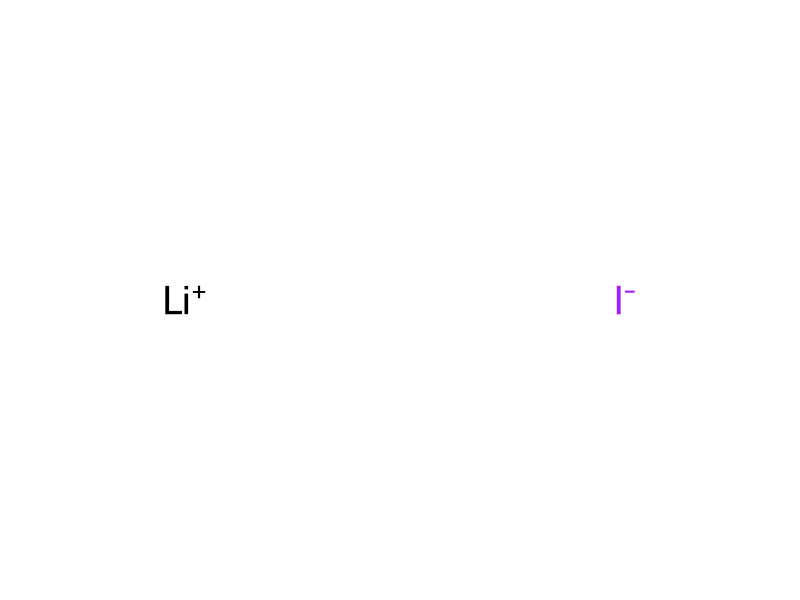
C[O:2][C:3]1[CH:8]=[CH:7][CH:6]=[CH:5][C:4]=1[S:9][C:10]1[CH:22]=[CH:21][C:13]2[O:14][C:15]([CH3:20])([CH3:19])[C:16]([CH3:18])=[CH:17][C:12]=2[CH:11]=1.[I-].[Li+]>N1C(C)=CC(C)=CC=1C.ClCCl>[OH:2][C:3]1[CH:8]=[CH:7][CH:6]=[CH:5][C:4]=1[S:9][C:10]1[CH:22]=[CH:21][C:13]2[O:14][C:15]([CH3:19])([CH3:20])[C:16]([CH3:18])=[CH:17][C:12]=2[CH:11]=1Participants
5




Conditions
- Temperature
- 150 °C
Procedure
6-(2-Methoxyphenyl)thio-2,2,3-trimethyl-2H-benzo[b]pyran (3.5 g) (see Preparation 7) was dissolved in dry 2,4,6-collidine (15 ml), anhydrous lithium iodide (9.0 g) was added and the mixture was heated at 150° C. for 40 hours. After cooling, the mixture was taken up in dichloromethane and washed with 2N aqueous hydrochloric acid solution (×3). The organic layer was dried (anhydrous sodium sulphate), the solvent removed under reduced pressure and the residue was chromatographed on silica using 1:1 hexane: dichloromethane as the eluent to yield 6-(2-hydroxyphenyl)thio-2,2,3-trimethyl-2H-benzo[b]pyran (1.2 g) as an oil.
Workup
- temperatureAfter cooling
- washwashed with 2N aqueous hydrochloric acid solution (×3)
- dry with materialThe organic layer was dried (anhydrous sodium sulphate)
- customthe solvent removed under reduced pressure
- customthe residue was chromatographed on silica using 1:1 hexane
Sources & evidence
- ORD record
- ord-1137ed7e75e34d70a1406fabe5830db3
- Source dataset
- uspto-grants-1999_06
- Patent number
- US05912244
Reaction notes
Loading…