Formaldehyde → HCID 159993, compound
Reaction equation

[OH:1][C:2]1[CH:7]=[CH:6][C:5]([C:8]([C:11]2[CH:16]=[CH:15][C:14]([OH:17])=[CH:13][CH:12]=2)([CH3:10])[CH3:9])=[CH:4][CH:3]=1.C(O)(=O)[C:19](O)=[O:20].C=O>C(OCCCC)(=O)C>[OH:1][C:2]1[CH:3]=[CH:4][C:5]([C:8]([C:11]2[CH:12]=[CH:13][C:14]([OH:17])=[CH:15][CH:16]=2)([CH3:10])[CH3:9])=[CH:6][CH:7]=1.[CH2:19]=[O:20]Participants
Reactant 3

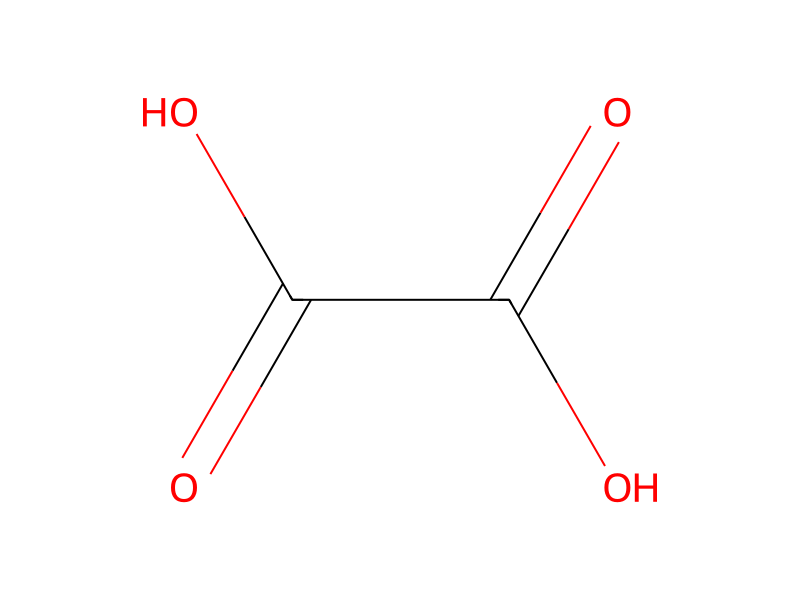

Product 1

Reagents, catalysts & solvents 1

Conditions
- Temperature
- 140 fahrenheit
Procedure
A bisphenol A-formaldehyde novolak polymer was prepared as follows. Two thousand grams of bisphenol A and 500.0 grams of n-butyl acetate were charged into a three-necked, five-liter flask equipped with a mechanical stirrer, a condenser, a thermometer and an addition funnel to form a mixture. Using an electric mantel, the mixture was heated to 140° F. to give a homogenous mixture. Then, 10.0 grams of oxalic acid were added to the mixture and mixed for five minutes. Then, 315.8 grams of 50 weight percent formaldehyde were added dropwise through the addition funnel. An exothermic reaction took place and a gentle reflux was initiated. Addition of all formaldehyde took 60 minutes and the mixture was refluxed for 5 hours. After refluxing, water and n-butyl acetate were collected by azeotropic distillation. Free formaldehyde content of the aqueous phase of the distillate was monitored periodically. If the free formaldehyde content was more than 0.5 percent, the distillate was returned to the flask. When the free formaldehyde was less than 0.5 percent, the distillate was removed. As the distillation progressed, temperature of the resinous product in the flask rose steadily to 340° F. At this point, the resinous product was flaked. The yield of the reaction was 2,150 grams and the resin was found to have 26.5 percent free bisphenol A with a melt viscosity of 80 seconds.
Workup
- customequipped with a mechanical stirrer, a condenser
- customa thermometer and an addition funnel to form a mixture
- customto give a homogenous mixture
- additionmixed for five minutes
- customAn exothermic reaction
- temperaturea gentle reflux
- temperaturethe mixture was refluxed for 5 hours
- temperatureAfter refluxing
- distillationwater and n-butyl acetate were collected by azeotropic distillation
- customthe distillate was removed
- distillationAs the distillation
- customrose steadily to 340° F
- customwith a melt viscosity of 80 seconds
Sources & evidence
- ORD record
- ord-93446d90488d4afb824251c25cd1b0b4
- Source dataset
- uspto-grants-1999_06
- Patent number
- US05916933
Reaction notes
Loading…