Caprolactam → 6-Oxohexanoic acid
Reaction equation

C1(=O)NCCCCC1.[CH:9]([CH2:11][CH2:12][CH2:13][CH2:14][C:15]([O:17]C)=[O:16])=[O:10]>O>[CH:9]([CH2:11][CH2:12][CH2:13][CH2:14][C:15]([OH:17])=[O:16])=[O:10]Participants
Reactant 2
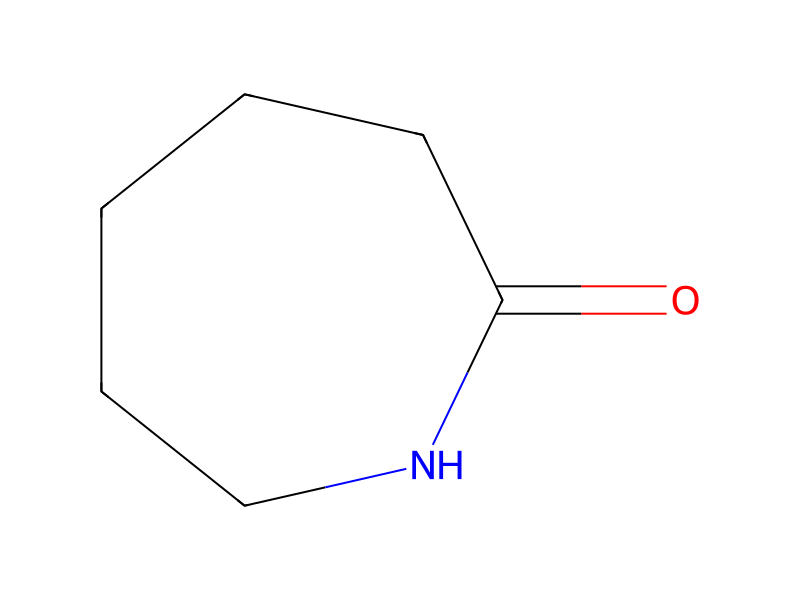

Product 1

Reagents, catalysts & solvents 1

Procedure
A process for preparing .di-elect cons.-caprolactam is described in U.S. Pat. No. 4,730,040. In this process, methyl 5-formylvalerate is first hydrolyzed (step x) in the presence of water and an acidic agent to yield 5-formylvaleric acid. In this process, the 5-formylvaleric acid is reductively aminated in water through contact with ammonia and hydrogen using a ruthenium/zirconium on alumina catalyst or a Raney Nickel catalyst to obtain a 6-aminocaproic acid containing reaction mixture. After separation of ammonia, the reaction mixture obtained from the reductive amination is heated to 300° C. to form .di-elect cons.-caprolactam by cyclization of the 6-aminocaproic acid. A disadvantage of the process according to U.S. Pat. No. 4,730,040 is the poor yields obtined from the reductive amination which present it from being a commercially attractive process. According to the experimental results, the best yield of the hydrolysis step is only about 78%, the best yield of the reductive amination step is only about 77% and the best yield of the final step is only about 95%. Hence, the overall yield is at most 57%.
Workup
- customA process for preparing .di-elect cons
Sources & evidence
- ORD record
- ord-a2d3a1eedefb427faa54606a736af16f
- Source dataset
- uspto-grants-1999_03
- Patent number
- US05877314
Reaction notes
Loading…