Ammonium Chloride → HCID 71014250, compound
Reaction equation

Br[C:2]1[CH:7]=[C:6]([Cl:8])[CH:5]=[CH:4][N:3]=1.C([Li])CCC.[O:14]=[C:15]1[CH2:20][CH2:19][N:18]([C:21]([O:23][C:24]([CH3:27])([CH3:26])[CH3:25])=[O:22])[CH2:17][CH2:16]1.[Cl-].[NH4+]>C(Cl)Cl>[Cl:8][C:6]1[CH:5]=[CH:4][N:3]=[C:2]([C:15]2([OH:14])[CH2:16][CH2:17][N:18]([C:21]([O:23][C:24]([CH3:26])([CH3:25])[CH3:27])=[O:22])[CH2:19][CH2:20]2)[CH:7]=1Participants





Procedure
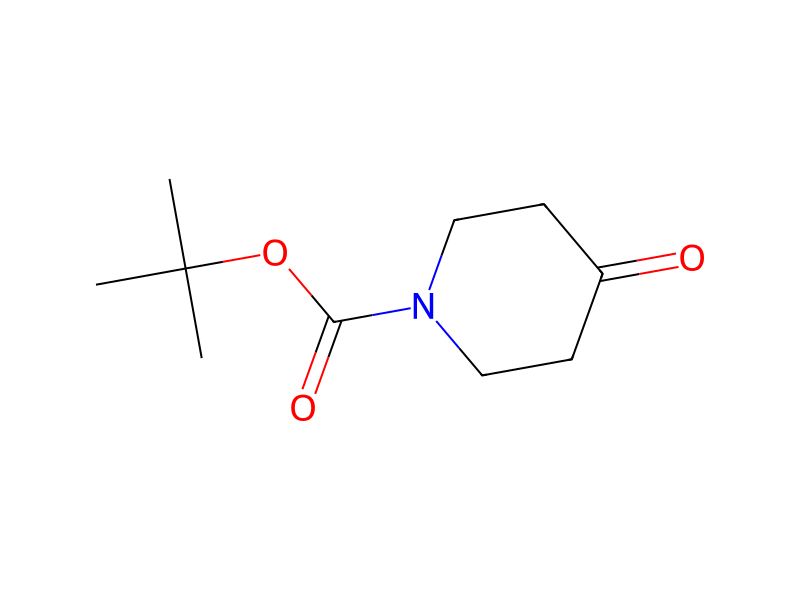
To a solution of 2-bromo-4-chloropyridine (C2) (1.00 g, 5.20 mmol) in CH2Cl2 (10 mL) cooled to −78° C. was added n-butyllithium (1.6 M in hexanes, 3.57 mL, 5.72 mmol) dropwise. After 15 min, a solution of tert-butyl 4-oxopiperidine-1-carboxylate (C1) (1.14 g, 5.72 mmol) in CH2Cl2 (3 mL) was added dropwise. After 1 h, saturated aqueous ammonium chloride (5 mL) was added. The mixture was warmed to ambient temperature, diluted with CH2Cl2 and washed with saturated aqueous sodium bicarbonate and brine. The organic solution was dried over sodium sulfate, filtered, and concentrated in vacuo. The resultant residue was purified via silica gel chromatography eluting with 0-20% ethyl acetate in hexanes to provide tert-butyl 4-(4-chloropyridin-2-yl)-4-hydroxypiperidine-1-carboxylate (C3).
Workup
- waitAfter 1 h
- washwashed with saturated aqueous sodium bicarbonate and brine
- dry with materialThe organic solution was dried over sodium sulfate
- filtrationfiltered
- concentrationconcentrated in vacuo
- customThe resultant residue was purified via silica gel chromatography
- washeluting with 0-20% ethyl acetate in hexanes
Sources & evidence
- ORD record
- ord-024d63e80a3547c68fb4573b000c6d4e
- Source dataset
- uspto-grants-2015_01
- Patent number
- US08940765B2
Reaction notes
Loading…