5-Methoxyindole → 2-Chloro-4-(5-methoxy-1H-indol-1-yl)quinazoline
Reaction equation

[Cl:1][C:2]1[N:11]=[C:10](Cl)[C:9]2[C:4](=[CH:5][CH:6]=[CH:7][CH:8]=2)[N:3]=1.[CH3:13][O:14][C:15]1[CH:16]=[C:17]2[C:21](=[CH:22][CH:23]=1)[NH:20][CH:19]=[CH:18]2>>[Cl:1][C:2]1[N:11]=[C:10]([N:20]2[C:21]3[C:17](=[CH:16][C:15]([O:14][CH3:13])=[CH:23][CH:22]=3)[CH:18]=[CH:19]2)[C:9]2[C:4](=[CH:5][CH:6]=[CH:7][CH:8]=2)[N:3]=1Participants
3
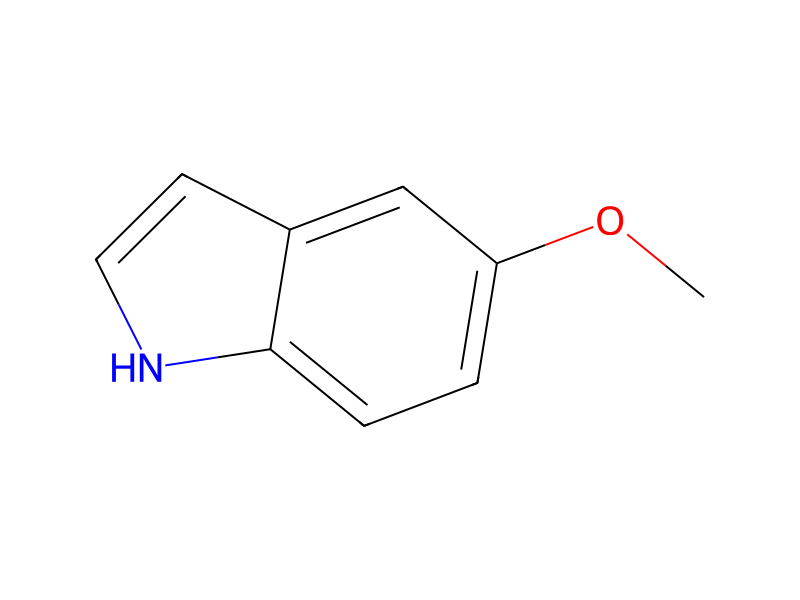


Procedure
The title compound was prepared from 2,4-dichloroquinazoline (50 mg, 0.251 mmol) and 5-methoxyindole (40 mg, 0.302 mmol) similar to example 1b and was isolated as white powder (14 mg, 28%). 1H NMR (CDCl3): 8.91 (s, 1H), 8.70 (ddd, J=8.4, 2.8 and 1.5 Hz, 1H), 8.01 (ddd, J=8.4, 2.8 and 1.5 Hz, 1H), 7.92 (dd, J=6.9 and 1.5 Hz, 1H), 7.87 (m, 1H), 7.74 (d, J=2.4 Hz, 1H), 7.61 (ddd, J=8.4, 6.9 and 1.2 Hz, 1H), 7.37 (d, J=9.0 Hz, 1H), 6.97 (dd, J=9.0 and 2.4 Hz, 1H), 3.88 (s, 3H).
Sources & evidence
- ORD record
- ord-7a5534e78e414b0e84c34375f35440fe
- Source dataset
- uspto-grants-2009_11
- Patent number
- US07618975B2
Reaction notes
Loading…