1H-Pyrrolo(2,3-b)pyridine → Tert-butyl 4-(1H-pyrrolo[2,3-B]pyridin-3-YL)-5,6-dihydropyridine-1(2H)-carboxylate
Reaction equation

[NH:1]1[C:9]2[C:4](=[CH:5][CH:6]=[CH:7][N:8]=2)[CH:3]=[CH:2]1.[C:10]([O:14][C:15]([N:17]1[CH2:22][CH2:21][C:20](=O)[CH2:19][CH2:18]1)=[O:16])([CH3:13])([CH3:12])[CH3:11].[OH-].[K+]>CO>[C:10]([O:14][C:15]([N:17]1[CH2:18][CH:19]=[C:20]([C:3]2[C:4]3[C:9](=[N:8][CH:7]=[CH:6][CH:5]=3)[NH:1][CH:2]=2)[CH2:21][CH2:22]1)=[O:16])([CH3:13])([CH3:11])[CH3:12]Participants
5




Procedure
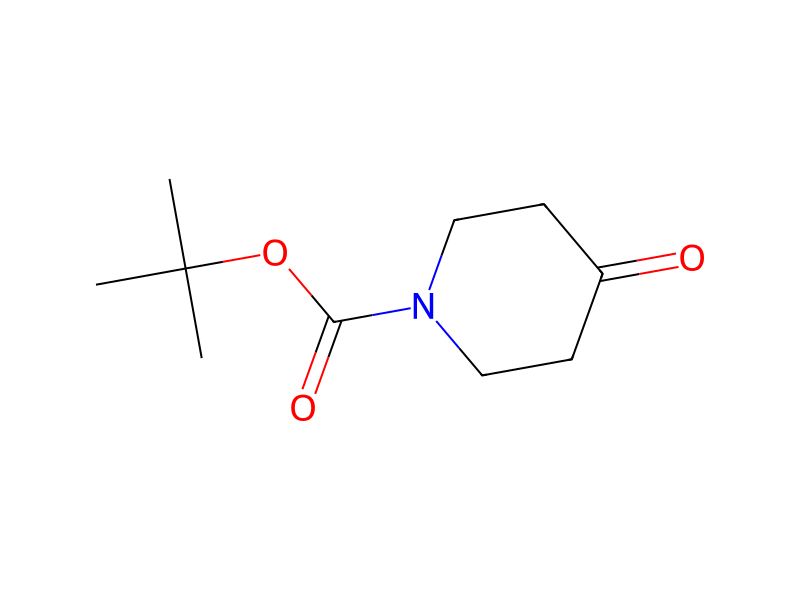
5 g (40 mmol) of 7-azaindole and 20 g (100 mmol) 4-oxopiperidine-1-carboxylic acid tert-butyl ester were added to an ice-cooled solution of 6 g (100 mmol) of potassium hydroxide in 120 ml of methanol. The mixture was heated to room temperature and then refluxed for 18 hours. Once cooled to room temperature, the formed solid was isolated by suction filtration. The filtered solution was concentrated at vacuum and a mixture of 22 ml of ethanol and 50 ml of water was added to the residue. A yellowish solid precipitated which corresponded to 6.32 g (53% of yield) of the expected product.
Workup
- temperaturerefluxed for 18 hours
- temperatureOnce cooled to room temperature
- customthe formed solid was isolated by suction filtration
- concentrationThe filtered solution was concentrated at vacuum
- additiona mixture of 22 ml of ethanol and 50 ml of water
- additionwas added to the residue
- customA yellowish solid precipitated which
Sources & evidence
- ORD record
- ord-91bec05241ff4a3c9231f308dac7bca4
- Source dataset
- uspto-grants-2009_11
- Patent number
- US07622480B2
Reaction notes
Loading…