Sodium Hydroxide → HCID 23025599, compound
Reaction equation

[NH2:1][C:2]1[C:7]([NH2:8])=[CH:6][C:5]([Br:9])=[CH:4][N:3]=1.[CH3:10][O:11][C:12]1[CH:17]=[CH:16][C:15]([CH2:18][C:19](Cl)=O)=[CH:14][CH:13]=1.C(OCC)(=O)C.O1CCCC1.[OH-].[Na+]>O>[Br:9][C:5]1[CH:6]=[C:7]2[NH:8][C:19]([CH2:18][C:15]3[CH:16]=[CH:17][C:12]([O:11][CH3:10])=[CH:13][CH:14]=3)=[N:1][C:2]2=[N:3][CH:4]=1Participants
6





Conditions
- Temperature
- 170 °C
Procedure
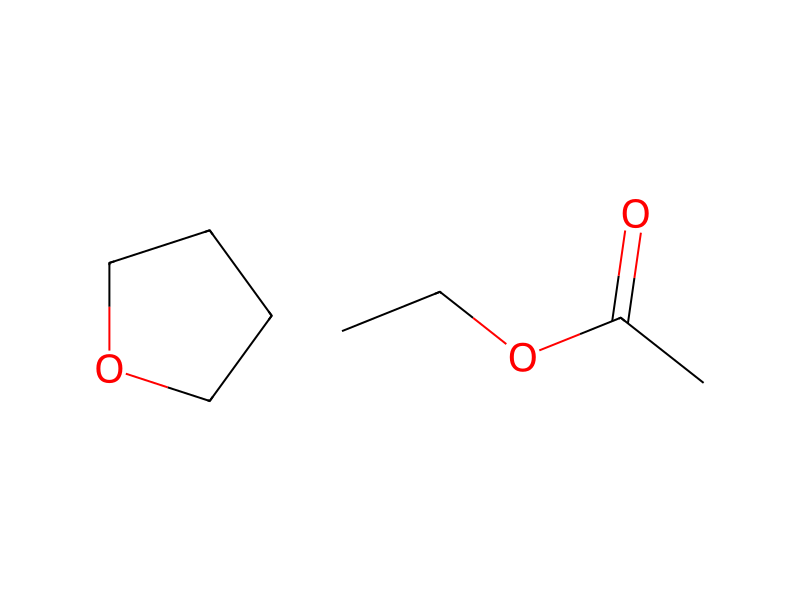
A mixture of 2,3-diamino-5-bromopyridine (Compound of Reference Example 1) (1.32 g) and 4-methoxyphenylacetyl chloride (1.29 g) was stirred in the absence of solvent at 170° C. for 1.5 hour. The mixture was distributed with ethyl acetate-tetrahydrofuran (3:1, v/v) and water (at that time, the water layer was neutralized with 1 N sodium hydroxide). The organic layer was washed with water, dried over MgSO4, and the solvent was distilled off under reduced pressure. The resulting crystals were collected by filtration to obtain 6-bromo-2-(4-methoxybenzyl)-1H-imidazo[4,5-b]pyridine (1.22 g, 55%).
Workup
- washThe organic layer was washed with water
- dry with materialdried over MgSO4
- distillationthe solvent was distilled off under reduced pressure
- filtrationThe resulting crystals were collected by filtration
Sources & evidence
- ORD record
- ord-abf5c7fe0b2c42d1bdd2cab5553f9a0d
- Source dataset
- uspto-grants-2009_11
- Patent number
- US07622479B2
Reaction notes
Loading…