2,6-Dichloro-3-pyridylamine → 6-Chloro-2-ethylpyridin-3-amine
Reaction equation

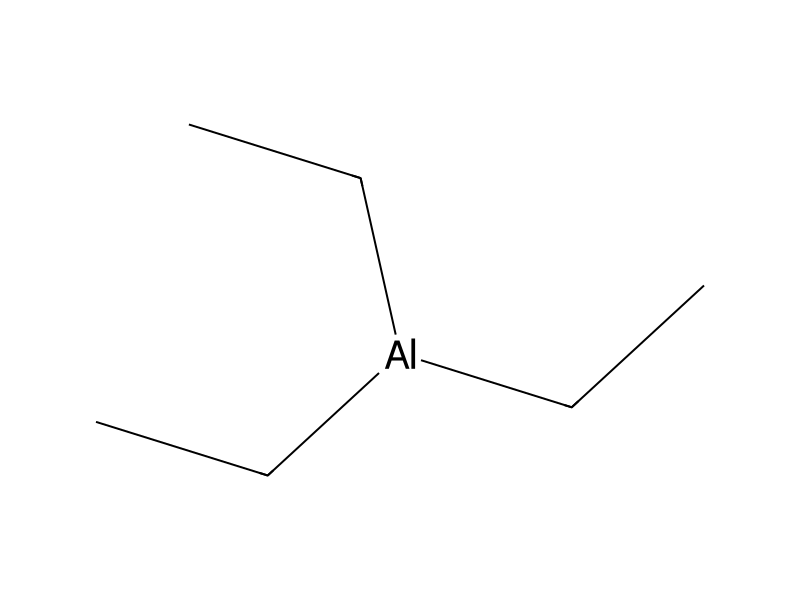
[NH2:1][C:2]1[C:3](Cl)=[N:4][C:5]([Cl:8])=[CH:6][CH:7]=1.[CH2:10]([Al](CC)CC)[CH3:11]>O1CCOCC1.C1C=CC([P]([Pd]([P](C2C=CC=CC=2)(C2C=CC=CC=2)C2C=CC=CC=2)([P](C2C=CC=CC=2)(C2C=CC=CC=2)C2C=CC=CC=2)[P](C2C=CC=CC=2)(C2C=CC=CC=2)C2C=CC=CC=2)(C2C=CC=CC=2)C2C=CC=CC=2)=CC=1>[Cl:8][C:5]1[N:4]=[C:3]([CH2:10][CH3:11])[C:2]([NH2:1])=[CH:7][CH:6]=1Participants
5
Reactant 2

Product 1

Reagents, catalysts & solvents 2


Conditions
- Temperature
- 100 °C
Procedure
To a solution of 3-amino-2,6-dichloropyridine (8.1 g, 50 mmol, purchased from TCl) in 1,4-dioxane (248 ml) was added tetrakis(triphenylphosphine)palladium(0) (920 mg, 0.80 mmol) and triethylaluminum (52 mmol, 0.94 M in hexane) at room temperature, and the mixture was stirred for 3 hours at 100° C. Themixture was quenched with 2 M HCl aqueous solution after cooling, and then it was separated between the aqueous and organic phases. The aqueous phase was extracted with EtOAc. The combined organic phases were dried over magnesium sulfate and concentrated. The crude product was purified by silica gel column chromatography, eluting with hexane/EtOAc (2:1), to give the title compound (2.73 g, 35%).
Workup
- customThemixture was quenched with 2 M HCl aqueous solution
- temperatureafter cooling
- customit was separated between the aqueous and organic phases
- extractionThe aqueous phase was extracted with EtOAc
- dry with materialThe combined organic phases were dried over magnesium sulfate
- concentrationconcentrated
- customThe crude product was purified by silica gel column chromatography
- washeluting with hexane/EtOAc (2:1)
Sources & evidence
- ORD record
- ord-d490016fe75849ceb850757c1fe58087
- Source dataset
- uspto-grants-2009_11
- Patent number
- US07622589B2
Reaction notes
Loading…