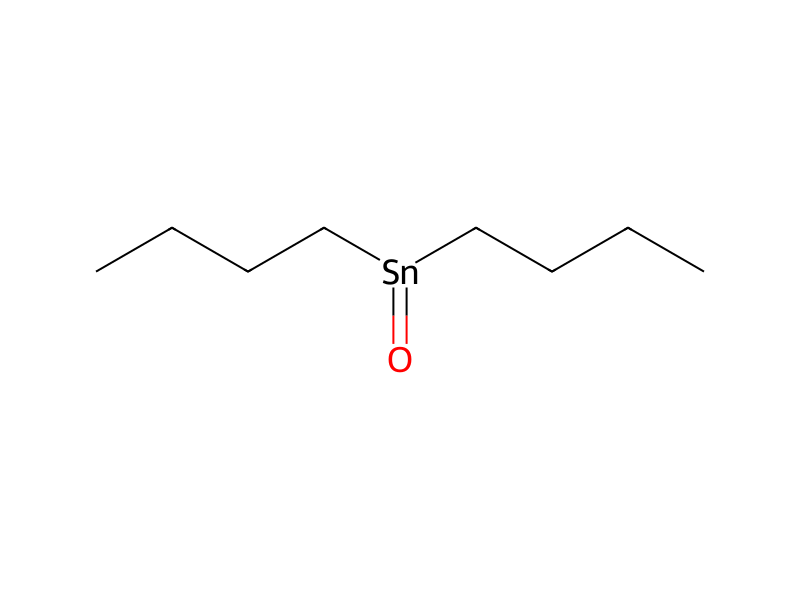
Dibutyltin oxide → HCID 131710948, compound
Reaction equation

[C:1]([O:13]CCCC)(=[O:12])[CH:2]([CH2:4][C:5]([O:7]CCCC)=[O:6])[SH:3].[CH2:18]([Sn:22](=O)[CH2:23][CH2:24][CH2:25][CH3:26])[CH2:19][CH2:20][CH3:21]>>[CH2:18]([C:4]([CH2:1][CH2:2][CH2:4][CH3:5])([C:5]([O-:7])=[O:6])[CH:2]([SH:3])[C:1]([O-:13])=[O:12])[CH2:19][CH2:20][CH3:21].[CH2:18]([Sn+2:22][CH2:23][CH2:24][CH2:25][CH3:26])[CH2:19][CH2:20][CH3:21]Participants
3


Procedure
Dibutyl thiomalate 140 grams (93% assay) was warmed to 90° C and dibutyltin oxide 125 grams was added slowly with stirring and continued heating. The dibutyltin oxide had dissolved by the time the mixture reached 130° C to give dibutyltin mono (dibutyl thiomalate) a viscous liquid.
Workup
- temperaturecontinued heating
- customreached 130° C
Sources & evidence
- ORD record
- ord-6495a15da94e439dac792584d3155549
- Source dataset
- uspto-grants-1977_11
- Patent number
- US04058543
Reaction notes
Loading…