Propylene Glycol → 2-Hydroxypropyl 4-(n-hexadecylamino)benzoate
Reaction equation

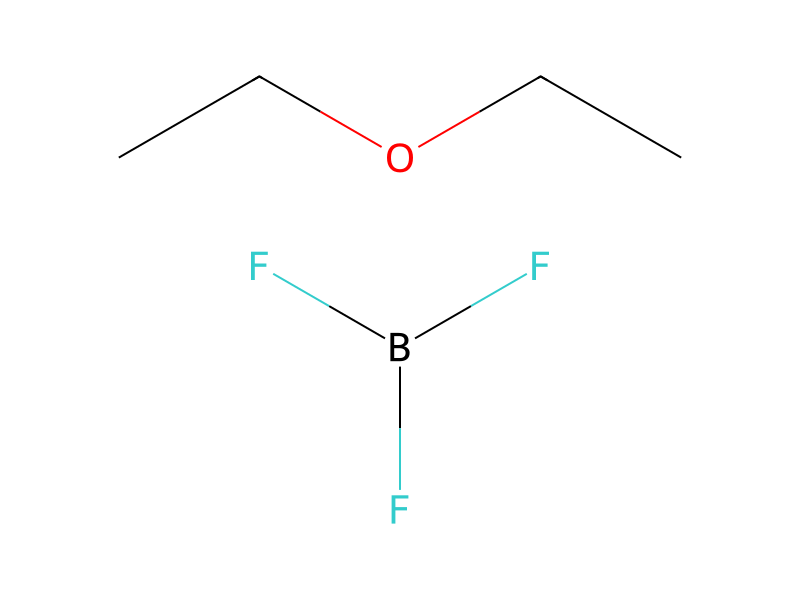
[CH2:1]([NH:17][C:18]1[CH:26]=[CH:25][C:21]([C:22]([OH:24])=[O:23])=[CH:20][CH:19]=1)[CH2:2][CH2:3][CH2:4][CH2:5][CH2:6][CH2:7][CH2:8][CH2:9][CH2:10][CH2:11][CH2:12][CH2:13][CH2:14][CH2:15][CH3:16].O[CH2:28][CH:29]([OH:31])[CH3:30].B(F)(F)F.CCOCC>C(Cl)Cl>[CH2:1]([NH:17][C:18]1[CH:19]=[CH:20][C:21]([C:22]([O:24][CH2:28][CH:29]([OH:31])[CH3:30])=[O:23])=[CH:25][CH:26]=1)[CH2:2][CH2:3][CH2:4][CH2:5][CH2:6][CH2:7][CH2:8][CH2:9][CH2:10][CH2:11][CH2:12][CH2:13][CH2:14][CH2:15][CH3:16]Participants
5
Reactant 3


Product 1

Reagents, catalysts & solvents 1

Procedure
A solution of 7.2 g. of 4-n-hexadecylaminobenzoic acid, 15.2 g. of 1,2-dihydroxypropane, and 3.9 ml. of boron trifluoride etherate are stirred together, under nitrogen, at 115° C. for 19 hours. The solution is cooled, diluted with methylene chloride, and placed in a freezer overnight. The solid is collected, washed with hexane, and oven-dried to yield a white solid. The solid is recrystallized from hexane and chromatographed on alumina with chloroform. This process yields 2-hydroxypropyl 4-(n-hexadecylamino)benzoate as a white solid, m.p. 91°-93° C.
Workup
- temperatureThe solution is cooled
- customThe solid is collected
- washwashed with hexane
- customoven-dried
- customto yield a white solid
- customThe solid is recrystallized from hexane
- customchromatographed on alumina with chloroform
Sources & evidence
- ORD record
- ord-90a208a5d7fb42ab9e29e88ec4c6a3a3
- Source dataset
- uspto-grants-1977_11
- Patent number
- US04058550
Reaction notes
Loading…