Pyridine → HCID 12368960, compound
Reaction equation

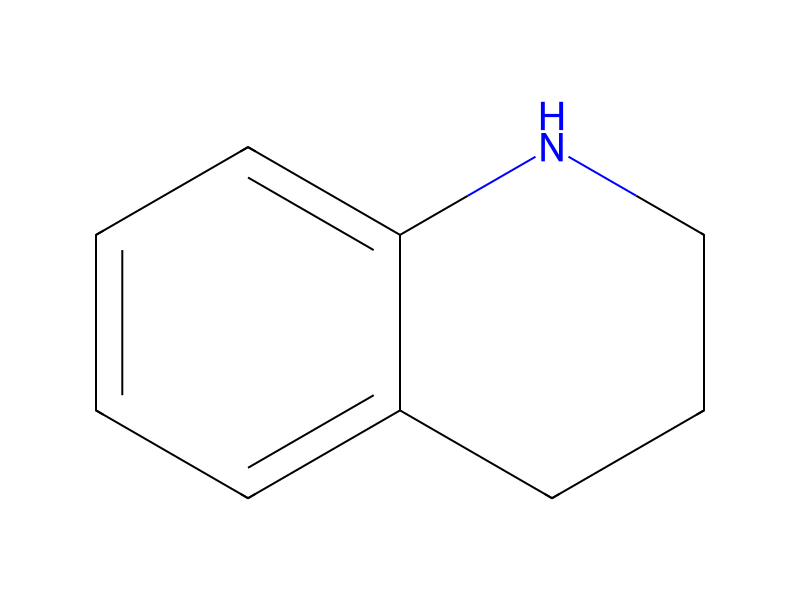
[NH:1]1[C:10]2[C:5](=[CH:6][CH:7]=[CH:8][CH:9]=2)[CH2:4][CH2:3][CH2:2]1.Cl[CH:12]1[CH2:17][CH2:16][CH2:15][CH2:14][C:13]1=O.N1C=CC=CC=1>COCCO.CCCCCC>[CH:8]1[CH:7]=[CH:6][C:5]2[CH2:4][CH2:3][CH2:2][N:1]3[C:10]=2[C:9]=1[C:12]1[CH2:17][CH2:16][CH2:15][CH2:14][C:13]=13Participants
6
Reactant 3


Product 1

Reagents, catalysts & solvents 2


Conditions
- Temperature
- 120 °C
Procedure
A mixture of 1,2,3,4-tetrahydroquinoline (4.0 mL, 32 mmol), 2-chlorocyclohexanone (3.6 mL, 32 mmol) and pyridine (3.0 mL, 38 mmol) in 2-methoxyethanol (80 mL) was heated to 120° C. for 48 h and was then concentrated. The black gummy residue was extracted into ethyl acetate and washed with 2 N HCl. The organic layer was dried (MgSO4) and concentrated. The material was purified by flash column chromatography (elution with 5% ethyl acetate-hexanes) to provide a clear oil which was dissolved in hexane. Upon cooling the solution to −78° C. a precipitate formed. The precipitate was collected to provide 5,6,8,9,10,11-hexahydro-4H-pyrido[3,2,1-jk]carbazole. MS (ES) m/z 212.1.
Workup
- concentrationwas then concentrated
- extractionThe black gummy residue was extracted into ethyl acetate
- washwashed with 2 N HCl
- dry with materialThe organic layer was dried (MgSO4)
- concentrationconcentrated
- customThe material was purified by flash column chromatography (elution with 5% ethyl acetate-hexanes)
- customto provide a clear oil which
- temperatureUpon cooling the solution to −78° C. a precipitate
- customformed
- customThe precipitate was collected
Sources & evidence
- ORD record
- ord-1231c86f7c0640288066b032df324f75
- Source dataset
- uspto-grants-2010_02
- Patent number
- US07662831B2
Reaction notes
Loading…