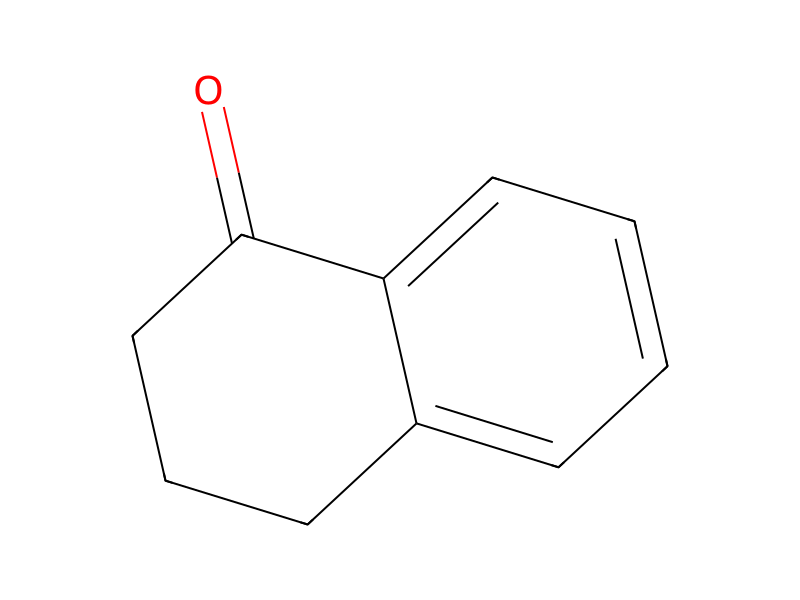
1-Tetralone → HCID 53980641, compound
Reaction equation

[CH2:1]1[CH2:11][C:9](=[O:10])[C:8]2[C:3](=[CH:4][CH:5]=[CH:6][CH:7]=2)[CH2:2]1.[CH3:12][N:13]([CH3:26])[CH2:14][CH2:15][CH2:16][O:17][C:18]1[CH:25]=[CH:24][C:21]([CH:22]=O)=[CH:20][CH:19]=1.[OH-].[K+]>C(O)C>[CH3:26][N:13]([CH3:12])[CH2:14][CH2:15][CH2:16][O:17][C:18]1[CH:19]=[CH:20][C:21]([CH:22]=[C:11]2[CH2:1][CH2:2][C:3]3[C:8](=[CH:7][CH:6]=[CH:5][CH:4]=3)[C:9]2=[O:10])=[CH:24][CH:25]=1Participants
5
Reactant 3


Product 1

Reagents, catalysts & solvents 1

Procedure
A stirred solution of 50 g of α-tetralone and 70 g of 4-(3-dimethylaminopropoxy)benzaldehyde in 275 ml of ethanol is cooled to -20° C. and treated with 2.0 g of potassium hydroxide dissolved in 50 ml of ethanol. The cooling bath is removed and after standing for about 16 hours at room temperature the reaction mixture (some product has separated) is added to 1.2 liters of cold water. The material is extracted with 3:1 ether-dichloromethane (five 300 ml portions), the combined extracts are dried over magnesium sulfate, and the solvents are removed on a rotary evaporator to give a semi-solid residue. Crystallization of the residue from 300 ml of diisopropyl ether yields 86 g of product; melting point 86°-88° C.
Workup
- customThe cooling bath is removed
- customthe reaction mixture (some product has separated)
- additionis added to 1.2 liters of cold water
- extractionThe material is extracted with 3:1 ether-dichloromethane (five 300 ml portions)
- dry with materialthe combined extracts are dried over magnesium sulfate
- customthe solvents are removed on a rotary evaporator
- customto give a semi-solid residue
- customCrystallization of the residue from 300 ml of diisopropyl ether
Sources & evidence
- ORD record
- ord-3347a18d50f34ca38fdbf8ce163f1c24
- Source dataset
- uspto-grants-1979_12
- Patent number
- US04179558
Reaction notes
Loading…