Water → Calcium Carbonate
Reaction equation

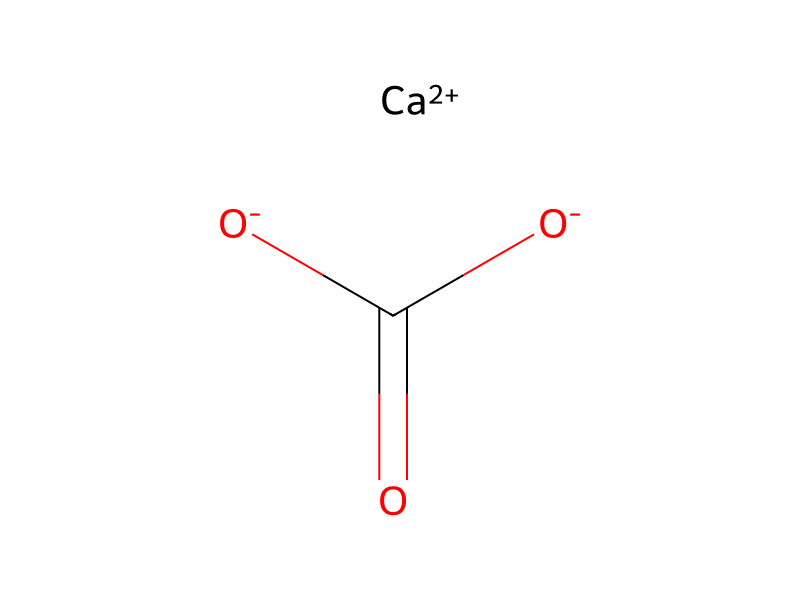
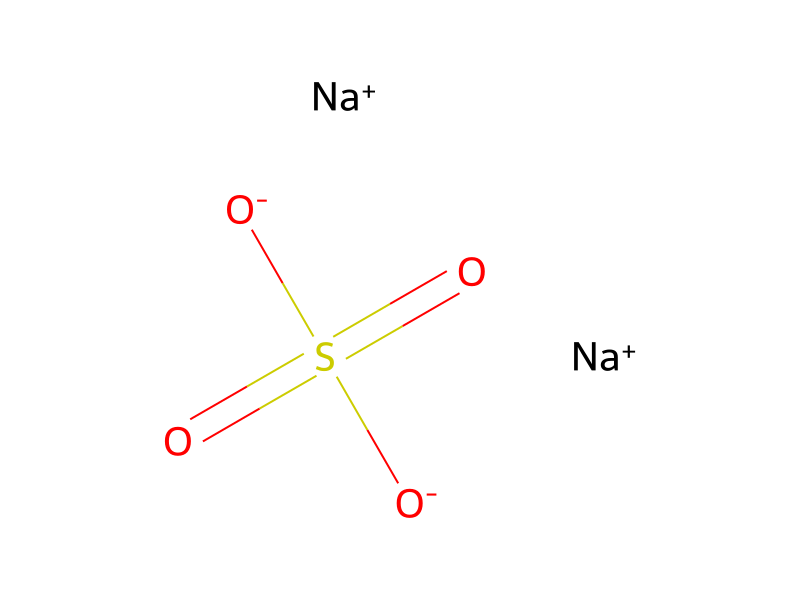
O.[C:2](=[O:5])([O-:4])[O-:3].[Na+:6].[Na+].[S:8]([O-:12])([O-:11])(=[O:10])=[O:9].[Ca+2:13]>[Cl-].[Na+].O>[S:8]([O-:12])([O-:11])(=[O:10])=[O:9].[Na+:6].[Na+:6].[C:2](=[O:3])([O-:5])[O-:4].[Ca+2:13]Participants
Reactant 3



Product 2
Reagents, catalysts & solvents 1

Procedure
In the preferred embodiment outlined in the drawings, the saline water feed solution 10, a desalination plant by-product brine solution containing about 6% dissolved salts, is withdrawn from feed storage trank 10 and charged to mixer-settler reactor 12. A sodium carbonate (soda ash) aqueous solution 13 is introduced into reactor 12. As will be explained below, this carbonate solution may be produced at another step in the process and recycled to reactor 12. The sodium carbonate solution 13 reacts with the calcium sulfate in the feed to produce sodium sulfate and insoluble calcium carb onate. Essentially all of the calcium carbonate, about 99% or more, preferably about 99.8% or more, settles out of the solution and is removed from reactor 12 at 14. The calcium carbonate 14 is then filtered in filter 15 and calcined in calciner 16 to convert the calcium carbonate to calcium oxide (quick lime), one of the commercially valuable products produced by the invention. The lime may be stored in storage bin 17. A portion of the lime may be used at a later point in the process, as will be discussed below.
Workup
- dissolutiondissolved salts
- customis withdrawn from feed storage trank 10
- additioncharged
- additionA sodium carbonate (soda ash) aqueous solution 13 is introduced into reactor 12
- custommay be produced at another step in the process and recycled to reactor 12
Sources & evidence
- ORD record
- ord-257e71774a8c41fd8b8376801e680097
- Source dataset
- uspto-grants-1979_12
- Patent number
- US04180547
Reaction notes
Loading…