Quinoline → rac. Z-1-benzyloxy-2-methyl-5-hepten-4-ol
Reaction equation

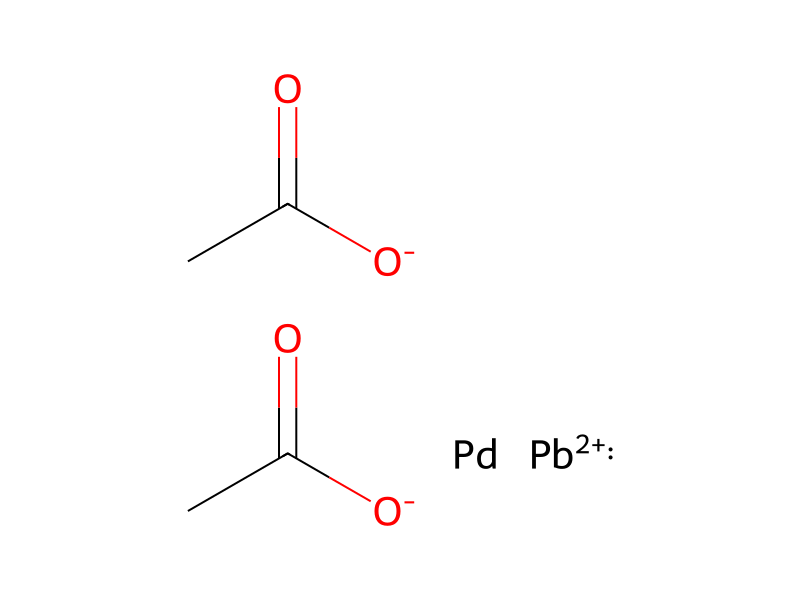
[CH2:1]([O:8][CH2:9][CH:10]([CH3:17])[CH2:11][CH:12]([OH:16])[C:13]#[C:14][CH3:15])[C:2]1[CH:7]=[CH:6][CH:5]=[CH:4][CH:3]=1.N1C2C(=CC=CC=2)C=CC=1.[H][H]>[Pd].CC([O-])=O.CC([O-])=O.[Pb+2].CCCCCC>[CH2:1]([O:8][CH2:9][CH:10]([CH3:17])[CH2:11][CH:12]([OH:16])/[CH:13]=[CH:14]\[CH3:15])[C:2]1[CH:7]=[CH:6][CH:5]=[CH:4][CH:3]=1Participants





Procedure
A mixture of 1 g. (4.31 mmoles) of rac. 1-benzyloxy-2-methylhept-5-yn-4-ol, 0.1 g. of Lindlar catalyst, 0.04 ml. of quinoline and 30 ml. of hexane was stirred in an atmosphere of hydrogen, at room temperature, for 40 minutes during which time approximately one equivalent of hydrogen was taken up. The catalyst was filtered and washed with hexane then the combined filtrate and washes were concentrated in vacuo giving 1.05 g. of oily product. This material was chromatographed on 50 g. of silica gel. Elution with 2:1 parts by volume and 1:1 parts by volume hexane-ether afforded 0.844 g. of a pale yellow oil. Evaporative distillation gave rac. Z-1-benzyloxy-2-methyl-5-hepten-4-ol as a colorless oil, b.p. 113°-123° C. (bath temperature (0.25 mm Hg.).
Workup
- additionA mixture of 1 g
- filtrationThe catalyst was filtered
- washwashed with hexane
- concentrationthe combined filtrate and washes were concentrated in vacuo
- customgiving 1.05 g
- customThis material was chromatographed on 50 g
- washElution with 2:1 parts by volume and 1:1 parts by volume hexane-ether
- customafforded 0.844 g
- distillationEvaporative distillation
Sources & evidence
- ORD record
- ord-8daef3e1597a497b970d9d133f6e7571
- Source dataset
- uspto-grants-1979_12
- Patent number
- US04180682
Reaction notes
Loading…