O-Phenylenediamine → 3,3-Dimethyloctahydroquinoxalin-2(1H)-one
Reaction equation

[C:1]1([NH2:8])[CH:6]=[CH:5][CH:4]=[CH:3][C:2]=1[NH2:7].C([O:11][C:12](=O)[C:13](Br)([CH3:15])[CH3:14])C>C(O)C>[CH3:14][C:13]1([CH3:15])[NH:8][CH:1]2[CH:2]([CH2:3][CH2:4][CH2:5][CH2:6]2)[NH:7][C:12]1=[O:11]Participants
4
Reactant 2
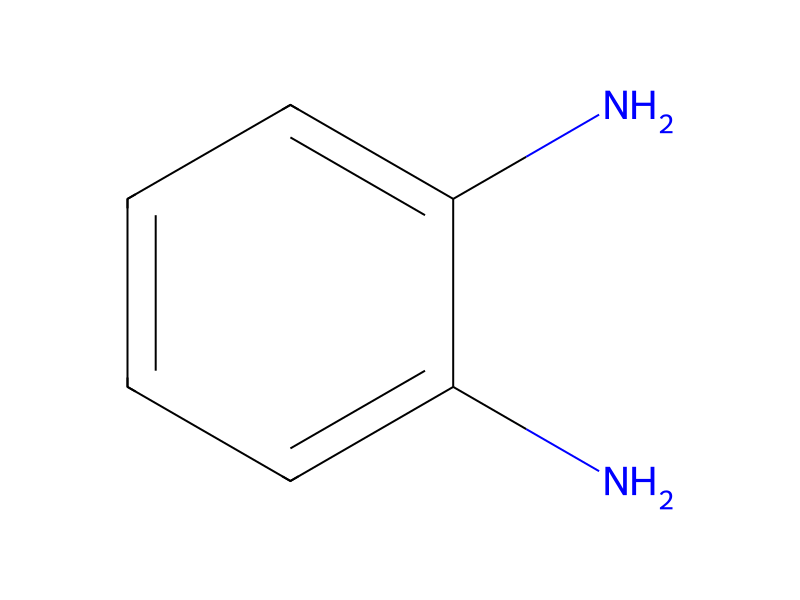

Product 1

Reagents, catalysts & solvents 1

Procedure
5.4 parts of o-phenylene diamine are placed in a flask and ethyl-2-bromoisobutyrate added thereto with ethanol solvent. The reaction mixture is heated and 3,3-dimethyl-3,4-dihydroquinoxalin-2-one is recovered. Upon hydrogenation in the presence of catalyst, 3,3-dimethyl-decahydroquinoxalin-2-one is formed which, when used at 0.5 phr concentration in polypropylene in a manner analogous to that set forth in Example 1A hereinabove, provides stabilization for about 2000 hours (see Table I)
Workup
- temperatureThe reaction mixture is heated
- custom3,3-dimethyl-3,4-dihydroquinoxalin-2-one is recovered
Sources & evidence
- ORD record
- ord-463320da157a49fa9044ff8f6805253a
- Source dataset
- uspto-grants-1980_02
- Patent number
- US04190571
Reaction notes
Loading…