Pivaloyl chloride → HCID 11615563, compound
Reaction equation

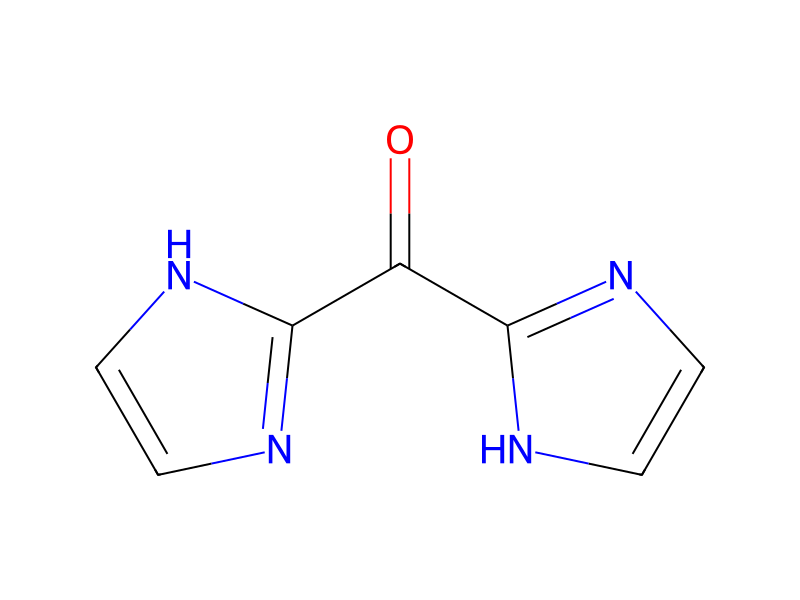
[O:1]1[C:6]2[CH:7]=[CH:8][C:9](C=O)=[CH:10][C:5]=2[O:4][CH2:3][CH2:2]1.[NH:13]1[CH2:17][CH:16]=[CH:15][CH2:14]1.[C:18](C1NC=CN=1)(C1NC=CN=1)=[O:19].C([NH+](CC)CC)C.CC(C)(C)C(Cl)=O>>[O:4]1[C:5]2[CH:10]=[CH:9][CH:8]=[C:7]([C:18]([N:13]3[CH2:17][CH:16]=[CH:15][CH2:14]3)=[O:19])[C:6]=2[O:1][CH2:2][CH2:3]1Participants




Procedure
1,4-Benzodioxan-6-carboxaldehyde is oxidized to the corresponding acid by the procedure of Shriner and Kleiderer in Organic Syntheses, Coll. Vol. 2:538 (1943). Coupling of the acid with 3-pyrroline is conducted by employing the same method as employed for the preparation of Invention Compound V, which uses carbonyl diimidazole in order to activate the carboxylic acid, or any other method known in the art, such as, for example, activation by the reaction of the triethylammonium salt with trimethylacetyl chloride. The product is crystallized from CCl4 /Et2O/hexanes. EMIS m/z=231 (parent), 163 (base), 135, and 107. 1H NMR δ 4.25-4.30 (m, 6), 4.43 (br, 2), 5.75 (m, 1), 5.85 (m, 1), 6.88 (d, 1, J=8.42 Hz), 7.06 (dd, 1, J=8.38, 2.03 Hz), and 7.09 (d, 1, J=2.05 Hz).
Workup
- customThe product is crystallized from CCl4 /Et2O/hexanes
Sources & evidence
- ORD record
- ord-d1fedefb0c3c4591ba36e8efdade5f95
- Source dataset
- uspto-grants-1998_12
- Patent number
- US05852008
Reaction notes
Loading…