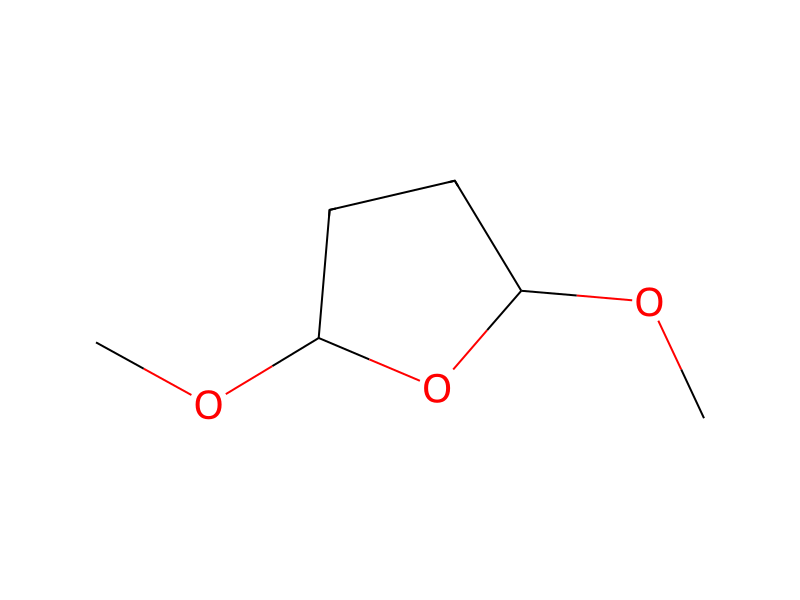
2,5-Dimethoxytetrahydrofuran → HCID 22097184, compound
Reaction equation

[NH2:1][C:2]1[CH:11]=[C:10]2[C:5]([NH:6][C:7](=[O:19])[C:8](=[O:18])[N:9]2[CH2:12][CH:13]([CH2:16][CH3:17])[CH2:14][CH3:15])=[CH:4][C:3]=1[N+:20]([O-:22])=[O:21].CO[CH:25]1[CH2:29][CH2:28][CH:27](OC)O1>C(O)(=O)C>[CH2:14]([CH:13]([CH2:16][CH3:17])[CH2:12][N:9]1[C:10]2[C:5](=[CH:4][C:3]([N+:20]([O-:22])=[O:21])=[C:2]([N:1]3[CH:25]=[CH:29][CH:28]=[CH:27]3)[CH:11]=2)[NH:6][C:7](=[O:19])[C:8]1=[O:18])[CH3:15]Participants
4
Reactant 2

Product 1

Reagents, catalysts & solvents 1

Procedure
2.5 g (8.2 mmol) of 7-amino-1-(2-ethylbutyl)-6-nitro-2,3(1H,4H)-quinoxalinedione and 1.1 g (8.2 mmol) of 2,5-dimethoxytetrahydrofuran were refluxed in 100 ml of acetic acid for 1 h. The mixture was then poured into ice-water, and the precipitate was filtered off with suction, washed with water and dried to yield 0.8 g (31%) of the product. Melting point 154°-155° C.
Workup
- filtrationthe precipitate was filtered off with suction
- washwashed with water
- customdried
Sources & evidence
- ORD record
- ord-2c93621df06d49eca3601e919f909e03
- Source dataset
- uspto-grants-1998_12
- Patent number
- US05852017
Reaction notes
Loading…