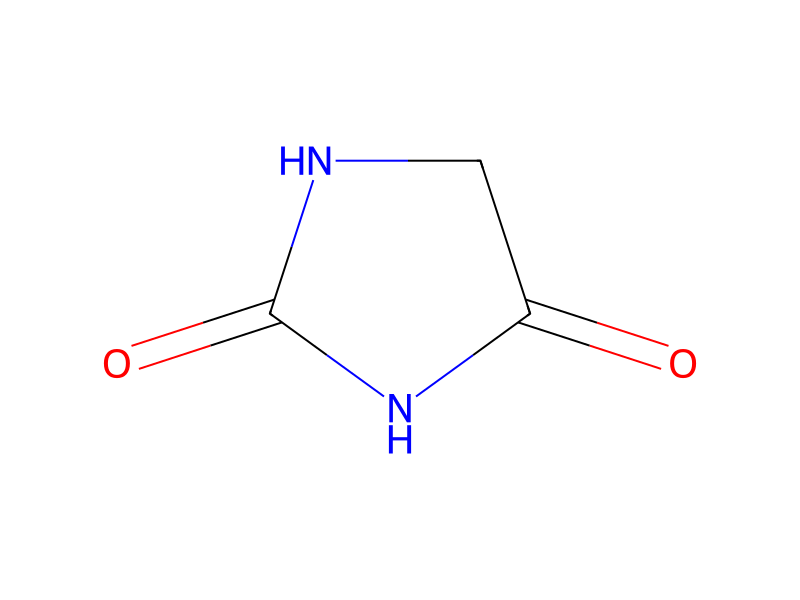
Hydantoin → HCID 19922460, compound
Reaction equation

N1CC(=O)NC1=O.N1C(=O)[C:11]2([C:24]3[C:17]([CH:18]=[C:19]4[S:23][CH:22]=[CH:21][C:20]4=3)=[CH:16][CH:15]=[CH:14]2)NC1=O>>[S:23]1[CH:22]=[CH:21][C:20]2[CH2:24][C:17]3[C:18]([C:19]1=2)=[CH:11][CH:14]=[CH:15][CH:16]=3Participants


Procedure
Synthesis substrates 4H-indeno[1,2-b]thiophen-4-one and 4H-indeno [1,2-b]thiophene can be prepared according to a general process of MacDowell and Jefferies, J. Org. Chem., 35, 871 (1970). In this process the 4-one substrate is prepared by the Ullmann coupling of ortho-iodo or ortho-bromo, di, tri and tetrasubstituted benzoic acid lower alkyl esters, such as 3-fluoro-2-iodo-benzoic acid ethyl or methyl ester (Chem. Abst.; 27:1339/G) or 2-bromo-4-fluoro-benzoic acid methyl ester (Chem. Abst. 99(1):5630j) or 2-bromo-5-chlorobenzoic acid methyl ester (J. Med. Chem., 13, 567-8 (1970)) with 2-iodo or 2-bromothiophene (Aldrich Chemical, Inc.). Saponification of the coupled product will yield the corresponding substituted 2-(2'-thienyl) benzoic acid (e.g., 5-chloro-2-(2'-thienyl)benzoic acid from 2-bromo-5-chloro-benzoic acid methyl ester. Cyclization of the acid is performed via the aroyl halide using stannic chloride or aluminum chloride to yield to substituted 4H-indeno[ 1,2-b]thiophen-4-one (B-1) (e.g., 6-chloro-4H-indeno[1,2-b]thiophen-4-one). This 4-one derivative is converted (in accordance with Method I) into a hydantoin derivative such as spiro-(6-chloro-4H-indeno[1,2-b]thiophen-4,4'-imidazolidine)-2',5'-dione. See Example XIII for the preparation of spiro-(4H-indeno[1,2]thiophen-4,4'-imidazolidine)-2',5'-dione. The Wolff-Kishner reduction (Method VIII) of B-1) yields the corresponding 4H-indeno[1,2-b]thiophene. Product isolation is best accomplished by fractional distillation, but may involve other separation methods as are known in the art. The resulting substituted or unsubstituted 4H-indeno[1,2-b]thiophene (which may be further derivatized according to Method V) is metalated by n-butyllithium and carbonated in the methylene bridge to yield the corresponding 4-carboxylic acid which after esterification at reflux with a lower alkyl alcohol such as methanol under acid catalyzed conditions such as concentrated hydrochloride acid yields the corresponding substituted or unsubstituted 4H-indeno[1,2-b]thiophen-4-carboxylic acid lower alkyl ester, e.g., 6-chloro-4H-indeno[1,2-b]thiophen-4-carboxylic acid methyl ester. The ester is utilized according to Methods II, III and IV to yield the corresponding spiro-thiazolidinedione, spiro-oxazolidinedione and spiro-succinimide such as spiro-(6-chloro-4H-indeno[1,2-b]thiophen-4,5'-thiazolidine]-2',4'-dione, spiro-(6-chloro-4H-indeno[1,2-b]thiophen-4,5'-oxazolidine)-2',4'-dione and spiro-(6-chloro-4H-indeno[1,2-b]thiophen-4,3'-succinimide) respectively. The resulting spiro-derivatives may be further derivatized according to Method VI.
Sources & evidence
- ORD record
- ord-8a5944fe541745588d5c70653effe9a4
- Source dataset
- uspto-grants-1991_12
- Patent number
- US05070100
Reaction notes
Loading…