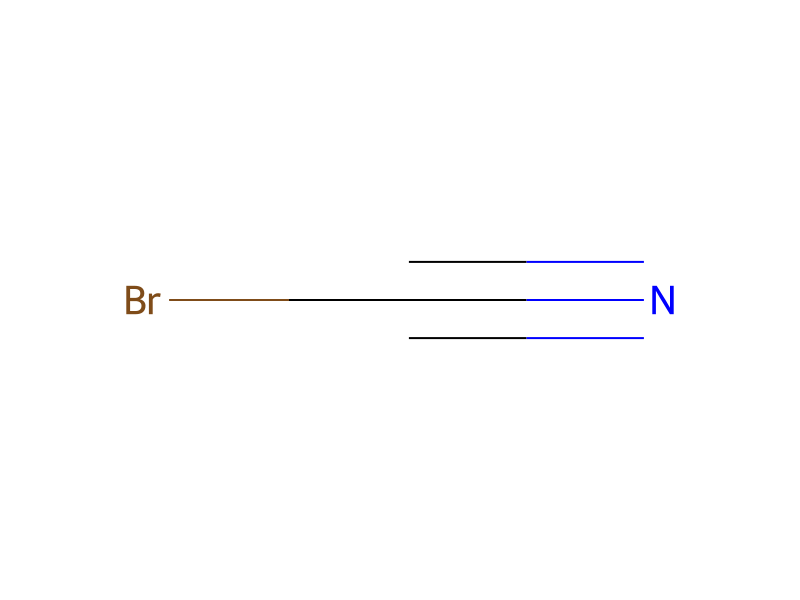
Cyanogen Bromide → HCID 178458301, compound
Reaction equation

S(O)(O)(=O)=O.[NH2:6][C:7]1[N:8]=[C:9]([C:15]2[CH:20]=[CH:19][CH:18]=[CH:17][C:16]=2[O:21][CH2:22][CH2:23][CH3:24])[NH:10][C:11](=[O:14])[C:12]=1[NH2:13].[N:25]#[C:26]Br.O.O.O.C([O-])(=O)C.[Na+]>C(O)C>[CH2:22]([O:21][C:16]1[CH:17]=[CH:18][CH:19]=[CH:20][C:15]=1[C:9]1[N:8]=[C:7]2[C:12](=[N:13][C:26]([NH2:25])=[N:6]2)[C:11](=[O:14])[N:10]=1)[CH2:23][CH3:24]Participants
5
Reactant 3


Product 1

Reagents, catalysts & solvents 1

Conditions
- Temperature
- 65 °C
Procedure
A partial solution of 4,5-diamino-2-(2-propoxyphenyl)-pyrimidin-6-one sulphate (1.1 g), cyanogen bromide (0.33 g), and sodium acetate trihydrate (0.42 g) in 50% aqueous ethanol (44 ml) was stirred at room temperature for 2 hours then allowed to stand overnight. The stirred mixture was then heated in a water bath (temperature 65° C.) for 3 hours, extra cyanogen bromide (0.05 g) added, and the mixture heated for a further 2 hours. The suspension was subjected to partial evaporation under reduced pressure then ammonium hydroxide was added to pH 5. The crude product was collected by filtration and recrystallised from acetonitrile to give the pure title compound, 0.6 g, m.p. 322°-335° C. dec. (after melting ca. 200° C.).
Workup
- temperaturethe mixture heated for a further 2 hours
- customThe suspension was subjected to partial evaporation under reduced pressure
- additionammonium hydroxide was added to pH 5
- filtrationThe crude product was collected by filtration
- customrecrystallised from acetonitrile
Sources & evidence
- ORD record
- ord-24a8e788c869404396183c22ff83bde4
- Source dataset
- uspto-grants-1991_12
- Patent number
- US05073559
Reaction notes
Loading…