Pyridine → HCID 15044334, compound
Reaction equation

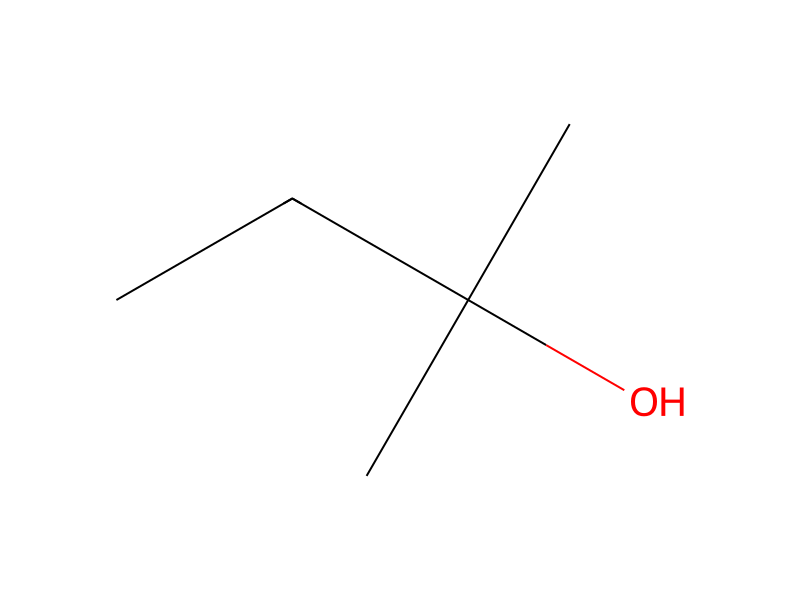
Cl[C:2]([O:4][C:5]1[CH:10]=[CH:9][C:8]([S:11][CH3:12])=[CH:7][CH:6]=1)=[O:3].[C:13]([OH:18])([CH2:16][CH3:17])([CH3:15])[CH3:14].N1C=CC=CC=1>ClCCl>[C:2](=[O:3])([O:4][C:5]1[CH:10]=[CH:9][C:8]([S:11][CH3:12])=[CH:7][CH:6]=1)[O:18][C:13]([CH2:16][CH3:17])([CH3:15])[CH3:14]Participants
5
Reactant 3


Product 1

Reagents, catalysts & solvents 1

Procedure
One hundred ml of dichloromethane and 20.27 g (0.1 mol) of p-methylthiophenyl chloroformate prepared in the same manner as in Example 1 were placed in a flask, and 50 ml of a dichloromethane solution containing 8.15 g (0.1 mol) of tert-amyl alcohol and 8.70 g (0.11 mol) of pyridine was dropped thereto at room temperature. The resulting mixture was then stirred for two hours. The reaction solution was washed with water to remove pyridine hydrochlorate, and the organic layer was concentrated under reduced pressure. Finally excessive pyridine was removed in vacuum whereupon 5.09 g of the desired product, tert-amyl p-methylthiophenyl carbonate was obtained as an oily material (yield 100%).
Workup
- customwere placed in a flask
- additionwas dropped
- customat room temperature
- washThe reaction solution was washed with water
- customto remove pyridine hydrochlorate
- concentrationthe organic layer was concentrated under reduced pressure
- customFinally excessive pyridine was removed in vacuum whereupon 5.09 g of the desired product
Sources & evidence
- ORD record
- ord-fee47fec55a34e968a093ad95c9650f5
- Source dataset
- uspto-grants-1991_12
- Patent number
- US05075476
Reaction notes
Loading…