Terephthalic Acid → Disodium terephthalate
Reaction equation

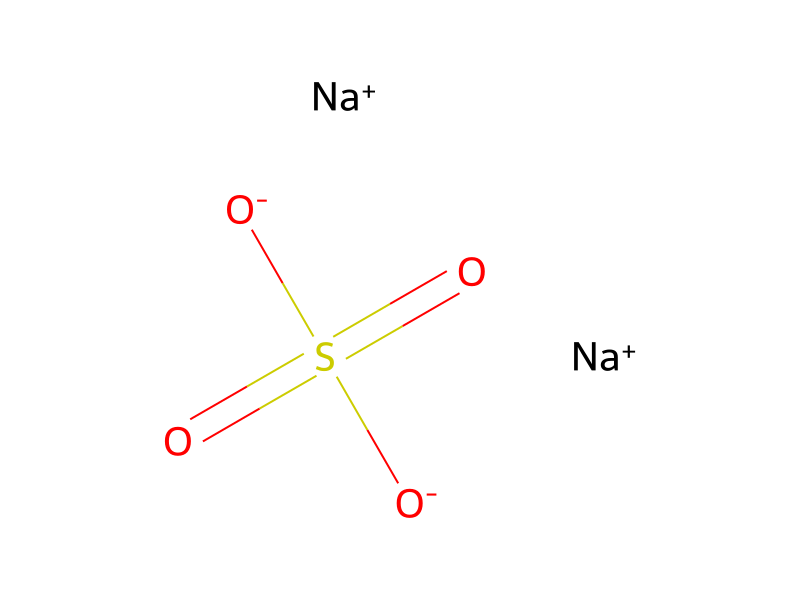
S([O-])([O-])(=O)=O.[Na+:6].[Na+].[C:8]([OH:19])(=[O:18])[C:9]1[CH:17]=[CH:16][C:12]([C:13]([OH:15])=[O:14])=[CH:11][CH:10]=1.[OH-].[Na+]>[Hg].O>[C:8]([O-:19])(=[O:18])[C:9]1[CH:17]=[CH:16][C:12]([C:13]([O-:15])=[O:14])=[CH:11][CH:10]=1.[Na+:6].[Na+:6]Participants
6
Reactant 3


Product 1

Reagents, catalysts & solvents 2


Procedure
An aqueous solution of 2 (wt)% sodium sulfate, approximately 0.14 moles/liter of water, was used as the pH neutral anolyte. The catholyte consisted of water, terephthalic acid, and sodium hydroxide. The cathode was mercury. The terephthalic acid reacted with the sodium hydroxide to form disodium terephthalate. The pH at the beginning of the electrochemical reaction was 7.2. As the reaction progressed, the pH increased to 12.9 at the end of the electrolysis. No attempt was made to maintain a neutral pH. Results are in Table I.
Sources & evidence
- ORD record
- ord-cf7bd1d0d0264c718c5f590aaa83a3cc
- Source dataset
- uspto-grants-1984_07
- Patent number
- US04457814
Reaction notes
Loading…