Water → HCID 13345142, compound
Reaction equation

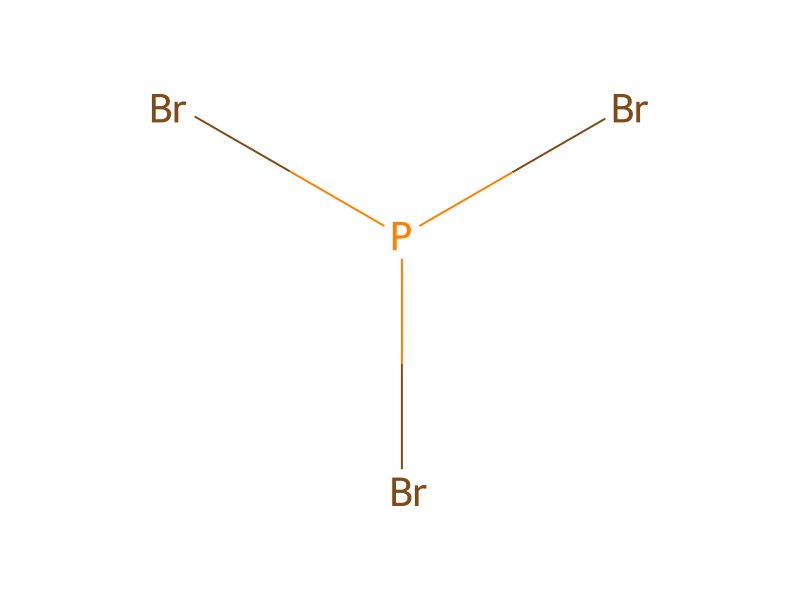
[N:1]1[CH:6]=[CH:5][CH:4]=[CH:3][C:2]=1[N:7]1[CH2:12][CH2:11][N:10]([CH:13]([CH3:16])[CH2:14]O)[CH2:9][CH2:8]1.P(Br)(Br)[Br:18].O>C(Cl)(Cl)Cl>[N:1]1[CH:6]=[CH:5][CH:4]=[CH:3][C:2]=1[N:7]1[CH2:12][CH2:11][N:10]([CH:13]([CH3:16])[CH2:14][Br:18])[CH2:9][CH2:8]1Participants
Reactant 3


Product 1

Reagents, catalysts & solvents 1

Conditions
- Temperature
- 60 °C
Procedure
The alcohol prepared in Part (b) hereinabove, (30 grams; 0.136 moles), diluted with 40 ml of chloroform is added dropwise to 15 cc of phosphorus tribromide. The mixture is warmed to about 60° C. for 2 hours. The mixture is then cooled to below 0° C. and the excess of the reagent is decomposed with water. The mixture is made alkaline, the organic phase is separated and the aqueous phase extracted with chloroform. The total organic phase is combined, dried and allowed to evaporate, giving as a residue a yellow solid material, which after recrystallization gives Compound (c) with m.p. 50°-51° C. from n-hexane; Rf=0.54 (from ethyl acetate); IR (nujol) νmax: 1600, 1490, 1445, 1320, 1260, 785 cm-1 ; Br (Schoeninger)--Calculated %: 28.1--Found %: 27.9.
Workup
- temperatureThe mixture is then cooled to below 0° C.
- customthe organic phase is separated
- extractionthe aqueous phase extracted with chloroform
- customdried
- customto evaporate
- customgiving as a residue a yellow solid material, which
- customafter recrystallization
Sources & evidence
- ORD record
- ord-faf3d7347ff647ff95e53299af7d5e31
- Source dataset
- uspto-grants-1984_07
- Patent number
- US04457931
Reaction notes
Loading…