Acetone → 1,2:3,4:5,6-Tris-O-(1-methylethylidene)hexitol
Reaction equation

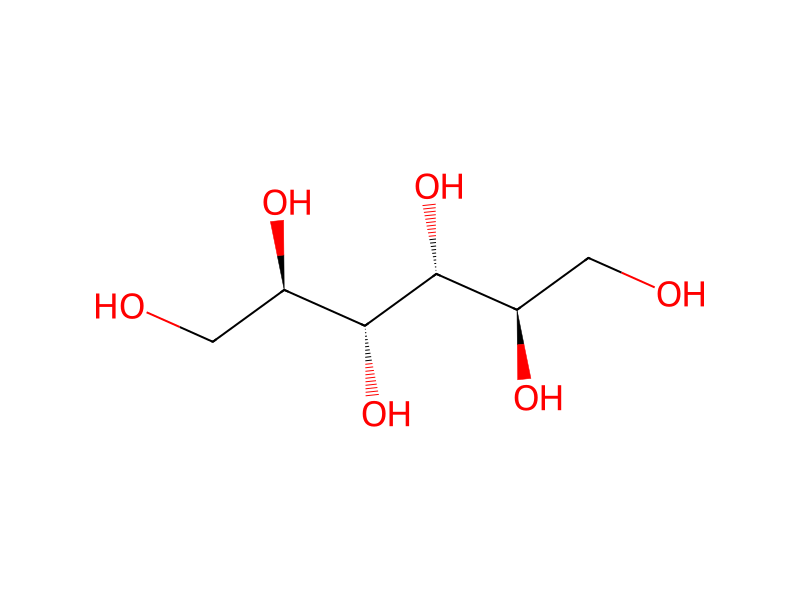
[CH2:1]([OH:12])[C@H:2]([C@H:4]([C@@H:6]([C@@H:8]([CH2:10][OH:11])[OH:9])[OH:7])[OH:5])[OH:3].[CH3:13][C:14]([CH3:16])=O>>[CH3:13][C:14]1([CH3:16])[O:9][CH:8]([CH:6]2[O:7][C:2]([CH3:4])([CH3:1])[O:5][CH:4]2[CH:2]2[O:3][C:8]([CH3:10])([CH3:6])[O:12][CH2:1]2)[CH2:10][O:11]1Participants


Conditions
- Temperature
- 58 °C
Procedure
To 250 ml of acetone were added 10.0 g of D-mannitol and 125 mg of anhydrous cupric chloride, and the mixture was stirred for 8 hours under reflux in a warm-water bath at 58° C. The refluxing solvent was continuously dried with 20 g of molecular sieves 3A which was placed between the reaction vessel and the cooling tube. After the conclusion of the reaction, the acetone was distilled off under reduced pressure, and the residue was dissolved in chloroform. The chloroform solution was washed with aqueous sodium hydrogencarbonate and water, and dried over anhydrous magnesium sulfate. When the chloroform was distilled under reduced pressure, there was obtained 16.0 g (96.4%) of 1,2:3,4:5,6-tri-O-isopropylidene-D-mannitol (purity of not less than 92%). The compound, when recrystallized from 70% ethanol, showed a melting point of 68.5° to 70.5° C.
Workup
- temperatureunder reflux in
- dry with materialThe refluxing solvent was continuously dried with 20 g of molecular sieves 3A which
- customAfter the conclusion of the reaction
- distillationthe acetone was distilled off under reduced pressure
- dissolutionthe residue was dissolved in chloroform
- washThe chloroform solution was washed with aqueous sodium hydrogencarbonate and water
- dry with materialdried over anhydrous magnesium sulfate
- distillationWhen the chloroform was distilled under reduced pressure
Sources & evidence
- ORD record
- ord-20fa67b0a83847c486c948771b5536f1
- Source dataset
- uspto-grants-1984_07
- Patent number
- US04460767
Reaction notes
Loading…