Isoprene → HCID 19864713, compound
Reaction equation

[CH2:1]=[CH:2][C:3](=[CH2:5])[CH3:4].[CH:6]([C:8]1[CH:13]=[CH:12][CH:11]=[CH:10][N:9]=1)=[CH2:7].C([Li])(CC)C>>[CH2:1]=[CH:2][C:3](=[CH2:4])[CH3:5].[CH:6]([C:8]1[CH:13]=[CH:12][CH:11]=[CH:10][N:9]=1)=[CH2:7]Participants

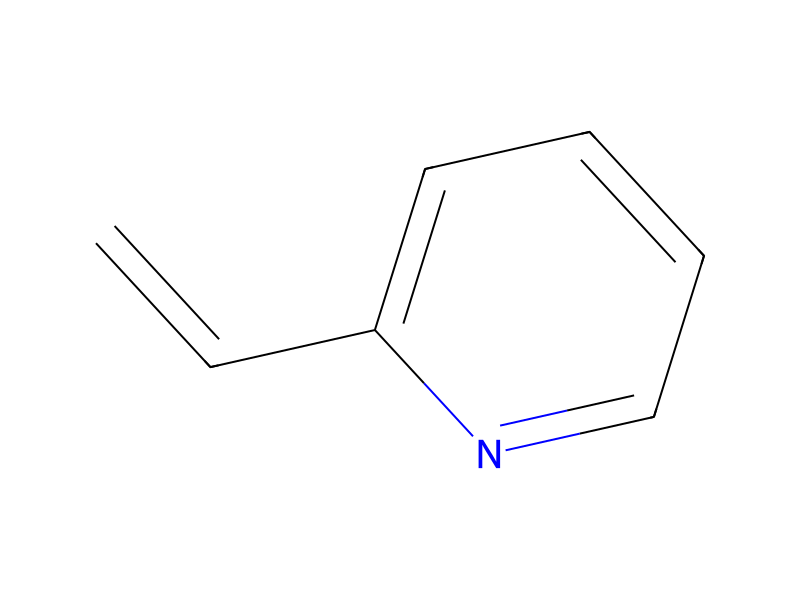
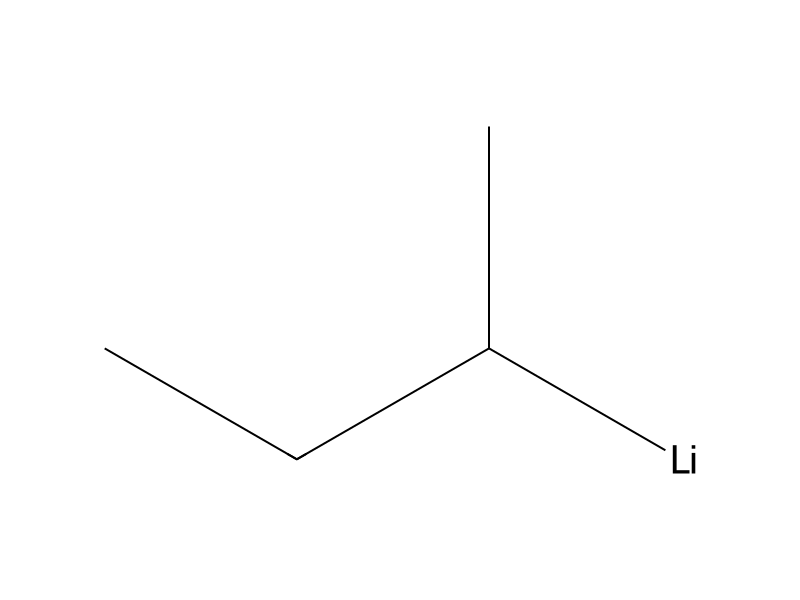

Conditions
- Temperature
- 40 °C
Procedure
The diblock copolymer was prepared by a sequential addition of isoprene and and 2-vinylpyridine to secbutyllithium. Benzene (500 ml) was degassed as before with oxygen-free argon for 45 minutes. Secbutyllithium (0.8 ml of 1.3M, 1.04 mmoles) was syringed in followed by 63.13 g (0.93 moles) of isoprene. The solution was stirred at 35° C. for 15 minutes and 40° C. for 15 minutes. There was an exotherm to 45° C. The solution was stirred at 45° C. for 11/2 hours more. As before the magnetic stirring system was switched to a mechanical for more efficient stirring. An aliquot of polyisoprene was syringed out for determination of the molecular weight of the starting block and the solution cooled to 8° C. At this stage 2-vinylpyridine (27.06 g, 0.26 mole) was added. Chain transfer to 2-vinylpyridine was noticed by the dark red color. The solution was stirred at 8° C. for 30 minutes and was quenched with degassed methanol. As before, the copolymer was characterized by 1H NMR and GPC. These results are also summarized in Table 1.
Workup
- customBenzene (500 ml) was degassed as before with oxygen-free argon for 45 minutes
- customto 45° C
- stirringThe solution was stirred at 45° C. for 11/2 hours more
- temperaturethe solution cooled to 8° C
- stirringThe solution was stirred at 8° C. for 30 minutes
- customwas quenched with degassed methanol
Sources & evidence
- ORD record
- ord-e6daa812cf0349a4b409d6d140049ac6
- Source dataset
- uspto-grants-1994_04
- Patent number
- US05304458
Reaction notes
Loading…