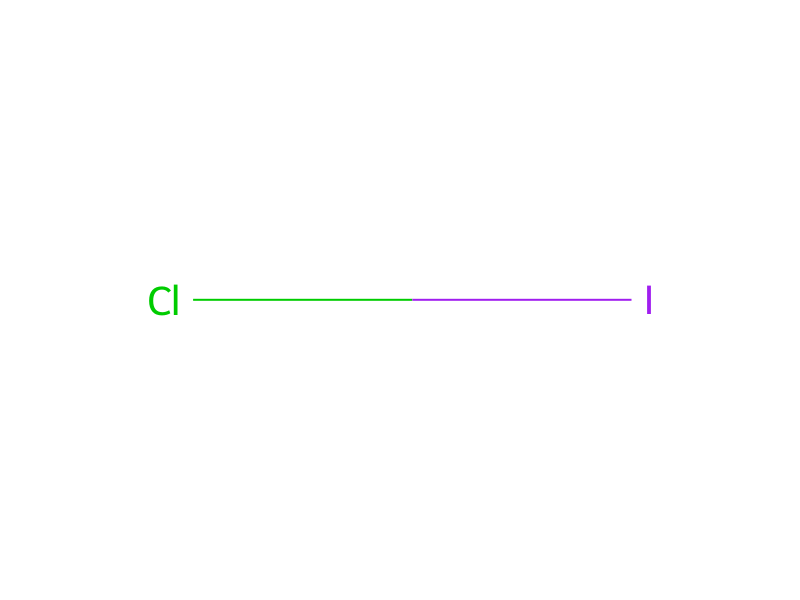
Iodine chloride → HCID 11023375, compound
Reaction equation

ClC(F)(F)C(F)(F)C(F)(F)C(F)(F)C(F)(F)C(F)(F)[C:8]([F:17])([F:16])[C:9]([F:15])([F:14])[C:10]([F:13])([F:12])[I:11].[Cl:30]C(F)(F)C(F)(F)C(F)(F)C(F)(F)C(F)(F)C(F)(F)C(F)(F)C(F)(F)C(F)(F)C(F)(F)C(F)(F)I.ICl.FC1(F)C(F)(F)C1(F)F>>[Cl:30][C:8]([F:17])([F:16])[C:9]([F:15])([F:14])[C:10]([F:13])([F:12])[I:11]Participants
5


Procedure
As for a compound in which n is 9 or 11 in formula (22), 1-chloro-9-iodoperfluorononane (22-4) or 1-chloro-11-iodoperfluoroundecane (22-5) can be obtained by allowing iodine monochloride to react with commercially available perfluorocyclopropane (53) at a high temperature to obtain 1-chloro-3-iodoperfluoropropane (54), and then allowing 1-chloro-3-iodoperfluoropropane (54) to react with tetrafluoroethylene (51) under high temperature and pressurized conditions.
Workup
- customcan be obtained
Sources & evidence
- ORD record
- ord-6fac8adbf5474dab8f47671695980718
- Source dataset
- uspto-grants-2015_04
- Patent number
- US08999196B2
Reaction notes
Loading…