Triethyl phosphite → 5-Bromo-6-chlorobenzo[c][1,2,5]oxadiazole
Reaction equation

[Br:1][C:2]1[C:3]([Cl:12])=[CH:4][C:5]2[C:6]([CH:11]=1)=[N+:7]([O-])[O:8][N:9]=2.P(OCC)(OCC)OCC>C(O)C>[Br:1][C:2]1[C:3]([Cl:12])=[CH:4][C:5]2=[N:9][O:8][N:7]=[C:6]2[CH:11]=1Participants
4
Reactant 2
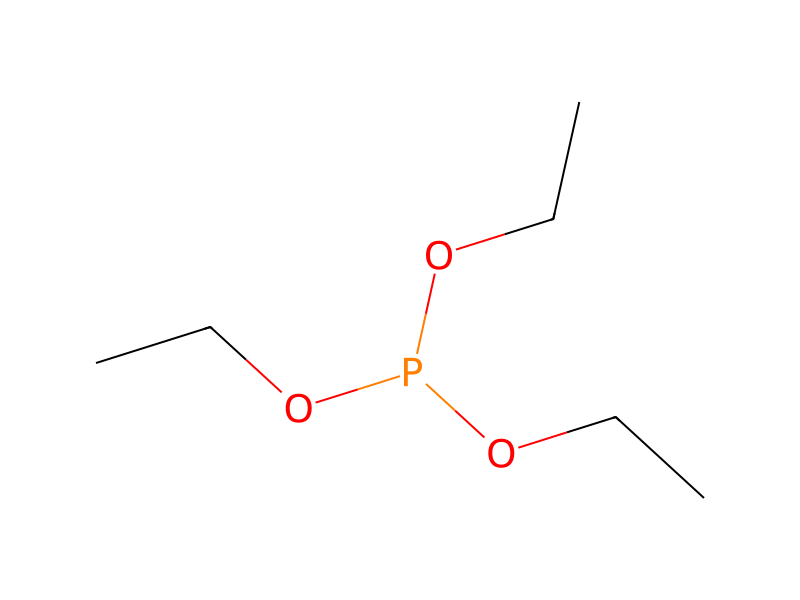

Product 1

Reagents, catalysts & solvents 1

Procedure
6-Bromo-5-chlorobenzo[c][1,2,5]oxadiazole 1-oxide (4.8 g, 19 mmol) was taken up 150 ml ethanol, heated to reflux, treated with triethyl phosphite (8.8 g, 53 mmol) and heated for 3.5 h. After cooling, the volatiles were removed by rotary evaporation, the residue was taken up in 100 mL dichloromethane and stirred with 50 mL bleach solution for 30 min. The organic phase was washed with 20 mL saturated NaCl, dried (Na2SO4) and evaporated. The crude material was purified by flash chromatography with a 0-30% ethyl acetate-hexane gradient to give the title compound as an orange solid (3.5 g, 79%): mp 68-69° C.; 1H NMR (400 MHz, CDCl3) δ 8.30 (s, 1H), 8.05 (s, 1H); EIMS m/z 232.
Workup
- temperatureheated
- temperatureto reflux
- temperatureheated for 3.5 h
- temperatureAfter cooling
- customthe volatiles were removed by rotary evaporation
- washThe organic phase was washed with 20 mL saturated NaCl
- dry with materialdried (Na2SO4)
- customevaporated
- customThe crude material was purified by flash chromatography with a 0-30% ethyl acetate-hexane gradient
Sources & evidence
- ORD record
- ord-dd4ba333b7224aa28c5526d6bbc0aadb
- Source dataset
- uspto-grants-2015_04
- Patent number
- US09006250B2
Reaction notes
Loading…