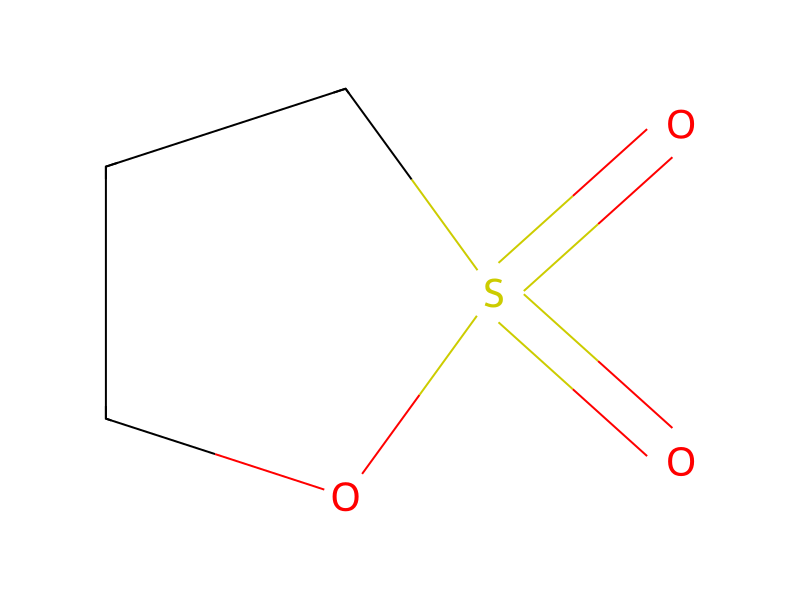
Propane sultone → HCID 71692790, compound
Reaction equation

[CH3:1][C:2]1[C:10]([CH3:12])([CH3:11])[C:9]2[C:4](=[CH:5][CH:6]=[C:7]([S:13]([O-:16])(=[O:15])=[O:14])[CH:8]=2)[N:3]=1.[Na+:17].[CH2:18]1[CH2:24][S:21](=[O:23])(=[O:22])[O:20][CH2:19]1>>[CH3:1][C:2]1[C:10]([CH3:11])([CH3:12])[C:9]2[C:4](=[CH:5][CH:6]=[C:7]([S:13]([O-:16])(=[O:15])=[O:14])[CH:8]=2)[N+:3]=1[CH2:19][CH2:18][CH2:24][S:21]([O-:23])(=[O:22])=[O:20].[Na+:17]Participants
3


Conditions
- Temperature
- 110 °C
Procedure
A mixture of 14 g of sodium 2,3,3-trimethyl-3H-indole-5-sulfonate and 14 g 1,3-propanesultone in 100 mL dicholorobenzene was heated at 110° C. for 2 h. After it cooled down, the solvent is decanted. The resulting solid was then dissolved in 100 mL of acetonitrile, and 300 mL of ethyl acetate was added. The resulting sticky solid was again stirred in 300 mL of ethyl acetate to yield 20 g of the product.
Workup
- temperatureAfter it cooled down
- customthe solvent is decanted
- dissolutionThe resulting solid was then dissolved in 100 mL of acetonitrile
- addition300 mL of ethyl acetate was added
Sources & evidence
- ORD record
- ord-a031dc4f377f421bac004707484ed21c
- Source dataset
- uspto-grants-2016_08
- Patent number
- US09408924B2
Reaction notes
Loading…