Water → 4-Bromo-1-cyclobutyl-2-(trifluoromethyl)benzene
Reaction equation

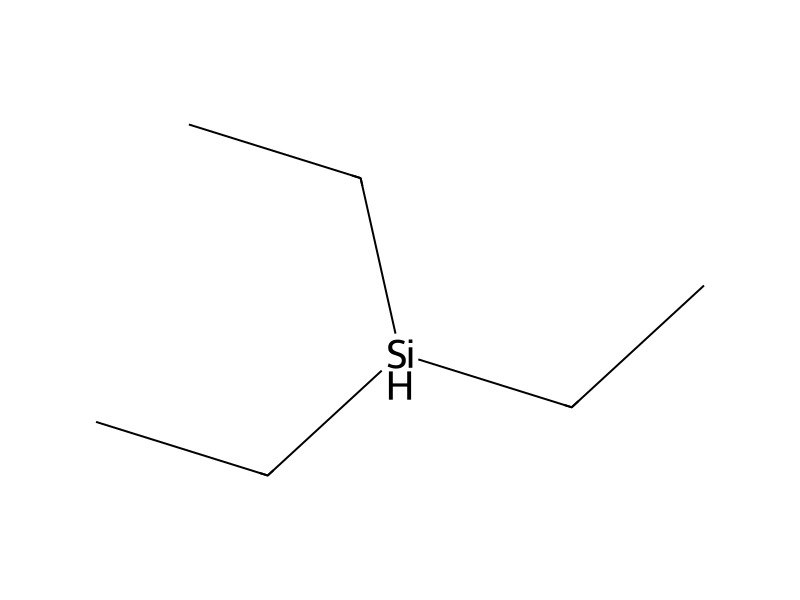
[Br:1][C:2]1[CH:7]=[CH:6][C:5]([C:8]2(O)[CH2:11][CH2:10][CH2:9]2)=[C:4]([C:13]([F:16])([F:15])[F:14])[CH:3]=1.C([SiH](CC)CC)C.C(=O)([O-])[O-].[K+].[K+].O>C(Cl)(Cl)Cl>[Br:1][C:2]1[CH:7]=[CH:6][C:5]([CH:8]2[CH2:11][CH2:10][CH2:9]2)=[C:4]([C:13]([F:14])([F:15])[F:16])[CH:3]=1Participants





Procedure
To a solution in chloroform (10.0 mL) of the compound (1.00 g) obtained in step (1) above and triethylsilane (406 mg), a solution of boron trifluoride/diethyl ether complex (601 mg) in chloroform (4.00 mL) was added at −65° C. After being brought to 0° C., the mixture was stirred at that temperature for 30 minutes. Subsequently, potassium carbonate (1.08 g) and water (10.0 mL) were added and the mixture was brought to room temperature. After phase separation, the organic layer was dried over anhydrous magnesium sulfate. After removing the desiccant by filtration, the filtrate was concentrated under reduced pressure. The resulting residue was purified by silica gel column chromatography (n-hexane:ethyl acetate=99:1-90:10) and further purified by NH silica gel column chromatography (n-hexane) to give 4-bromo-1-cyclobutyl-2-(trifluoromethyl)benzene as a colorless oil (490 mg).
Workup
- customAfter being brought to 0° C.
- customwas brought to room temperature
- customAfter phase separation
- dry with materialthe organic layer was dried over anhydrous magnesium sulfate
- customAfter removing the
- filtrationdesiccant by filtration
- concentrationthe filtrate was concentrated under reduced pressure
- customThe resulting residue was purified by silica gel column chromatography (n-hexane:ethyl acetate=99:1-90:10)
- customfurther purified by NH silica gel column chromatography (n-hexane)
Sources & evidence
- ORD record
- ord-7730ec43c1614a128b849e0811da7a81
- Source dataset
- uspto-grants-2016_08
- Patent number
- US09422240B2
Reaction notes
Loading…