Phenol → Diphenyl carbonate
Reaction equation

C(Cl)(Cl)=O.[C:5]1([OH:11])[CH:10]=[CH:9][CH:8]=[CH:7][CH:6]=1.Cl[C:13]([O:15][C:16]1[CH:21]=[CH:20][CH:19]=[CH:18][CH:17]=1)=[O:14]>C.[Ti]>[C:13](=[O:14])([O:15][C:16]1[CH:21]=[CH:20][CH:19]=[CH:18][CH:17]=1)[O:11][C:5]1[CH:10]=[CH:9][CH:8]=[CH:7][CH:6]=1Participants
5
Reactant 3


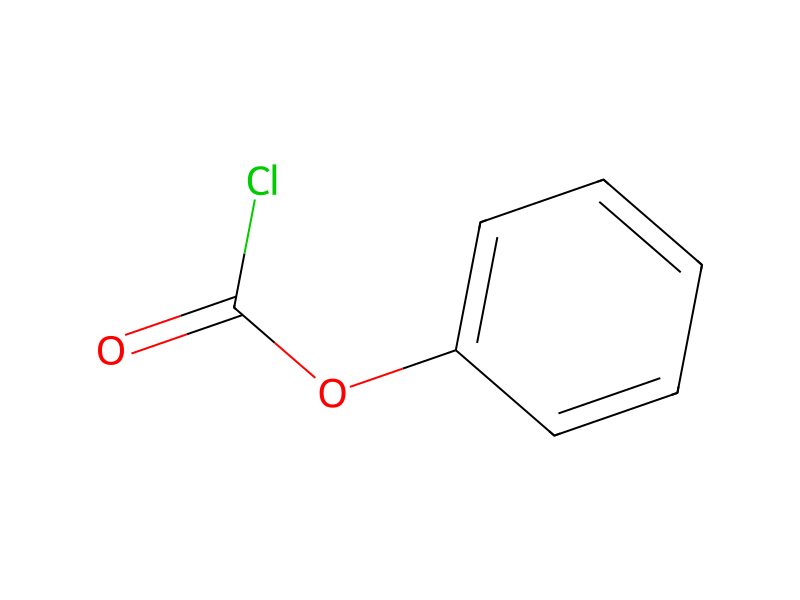
Product 1

Reagents, catalysts & solvents 1

Procedure
0.42 mol/h of phosgene were continuously passed through 141 g (1.50 mol) of phenol in the presence of 14.1 g (10 wt. % relative to the phenol) of a powdered titanium carbide from H. C. Starck at 140° C. in a plane ground joint flask equipped with flow spoilers, a gas-dispersion stirrer and reflux condenser. After approximately 2 hours' reaction time, phenol conversion was 18.2%, wherein 0.04 g of phenyl chloroformate and 28.7 g of diphenyl carbonate were formed. Selectivity for carbonates was approximately 99%.
Workup
- customStarck at 140° C. in a plane ground joint flask equipped with flow spoilers, a gas-dispersion stirrer
- temperaturereflux condenser
Sources & evidence
- ORD record
- ord-e2f61145e7184e6084d6958a61825aa6
- Source dataset
- uspto-grants-1997_10
- Patent number
- US05679825
Reaction notes
Loading…