Ethyl orthoformate → (E)-3-(4-chloro-3-trifluoromethyl-styryl)-1,2,4-oxadiazole
Reaction equation

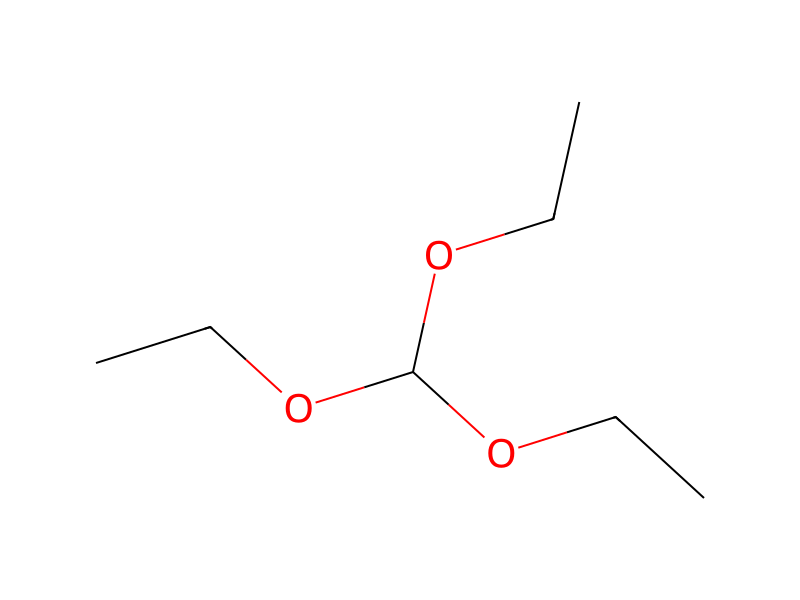
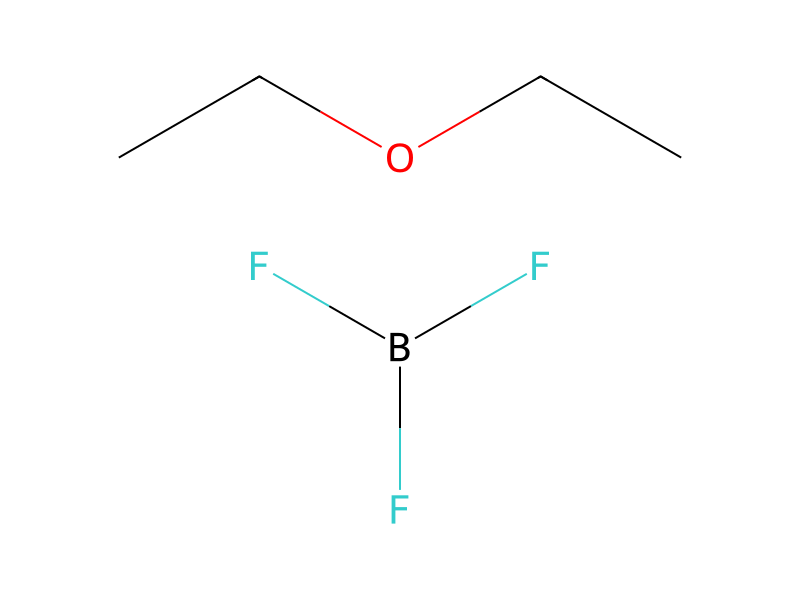
[Cl:1][C:2]1[CH:13]=[CH:12][C:5](/[CH:6]=[CH:7]/[C:8](=[N:10][OH:11])[NH2:9])=[CH:4][C:3]=1[C:14]([F:17])([F:16])[F:15].[CH:18](OCC)(OCC)OCC>B(F)(F)F.CCOCC>[Cl:1][C:2]1[CH:13]=[CH:12][C:5](/[CH:6]=[CH:7]/[C:8]2[N:9]=[CH:18][O:11][N:10]=2)=[CH:4][C:3]=1[C:14]([F:15])([F:16])[F:17]Participants
4


Procedure
5.2 g (0.02 mol) of (E)-4-chloro-3-trifluoromethyl-cinnamamide oxime are introduced into 50 ml of triethyl orthoformate and 2 drops of boron trifluoride etherate are added at room temperature. The mixture is then stirred for 2 hours at reflux temperature and the entire batch is concentrated in vacuo. The residue is taken up in 100 ml of methylene chloride and washed in succession with 100 ml of 2N hydrochloric acid, saturated sodium carbonate solution and water. The organic phase is dried over sodium sulphate and the solvent is subsequently distilled off. 3.9 g (71.0% of theory) of (E)-3-(4-chloro-3-trifluoromethyl-styryl)-1,2,4-oxadiazole are obtained.
Workup
- additionare added at room temperature
- temperatureat reflux temperature
- concentrationthe entire batch is concentrated in vacuo
- washwashed in succession with 100 ml of 2N hydrochloric acid, saturated sodium carbonate solution and water
- dry with materialThe organic phase is dried over sodium sulphate
- distillationthe solvent is subsequently distilled off
Sources & evidence
- ORD record
- ord-26b40f4176154b0597afba6c376cc1e9
- Source dataset
- uspto-grants-1994_12
- Patent number
- US05371231
Reaction notes
Loading…