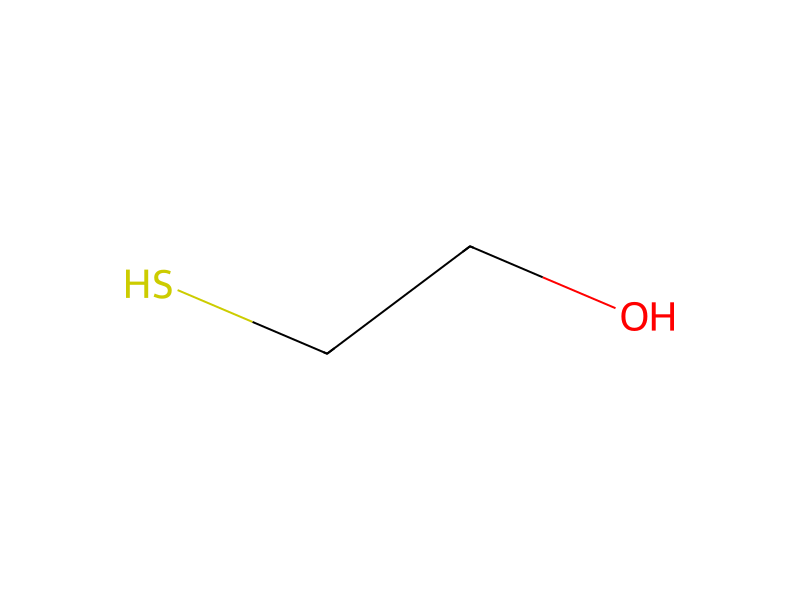
2-Mercaptoethanol → HCID 13885751, compound
Reaction equation

[SH:1][CH2:2][CH2:3][OH:4].C[O-].[Na+].[C:8]([C:11]1[CH:21]=[CH:20][C:14]([O:15][CH2:16][CH2:17][CH2:18]Br)=[C:13]([CH2:22][CH2:23][CH3:24])[C:12]=1[OH:25])(=[O:10])[CH3:9]>>[C:8]([C:11]1[CH:21]=[CH:20][C:14]([O:15][CH2:16][CH2:17][CH2:18][S:1][CH2:2][CH2:3][OH:4])=[C:13]([CH2:22][CH2:23][CH3:24])[C:12]=1[OH:25])(=[O:10])[CH3:9]Participants
4



Procedure
4.68 g. (60 mMole) 2-mercaptoethanol are stirred for 10 minutes at ambient temperature with 60 ml. 1 M sodium methylate solution. Subsequently, 9.39 g. 3-(4-acetyl-3-hydroxy-2-propyl-phenoxy)-propyl bromide are added thereto and the reaction mixture is boiled under reflux for 5 hours. The reaction mixture is thereafter evaporated and the residue mixed with water and ethyl acetate. The ethyl acetate phase is successively shaken with 2 M aqueous sodium hydroxide solution and with 2 M hydrochloric acid and then dried and evaporated. After recrystallising the residue from diethyl ether/ligroin, there are obtained 6.4 g. (68% of theory) of the title compound; m.p. 72-74° C.
Workup
- temperatureunder reflux for 5 hours
- customThe reaction mixture is thereafter evaporated
- additionthe residue mixed with water and ethyl acetate
- customdried
- customevaporated
- customAfter recrystallising the residue from diethyl ether/ligroin, there
- customare obtained 6.4 g
Sources & evidence
- ORD record
- ord-794f31817b0c49e49fb4b5b8a450ff33
- Source dataset
- uspto-grants-1991_06
- Patent number
- US05025028
Reaction notes
Loading…