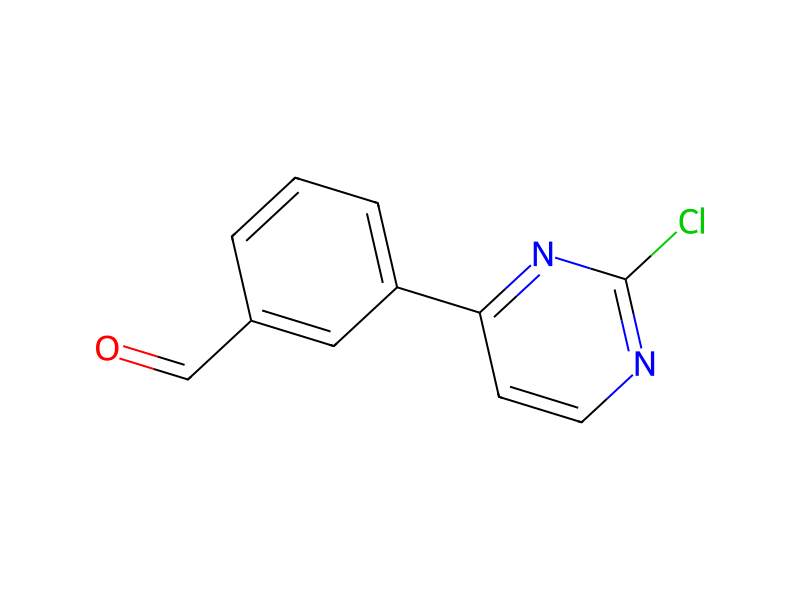
3-(2-Chloro-pyrimidin-4-yl)-benzaldehyde → HCID 86603323, compound
Reaction equation

[Cl:1][C:2]1[N:7]=[C:6]([C:8]2[CH:9]=[C:10]([CH:13]=[CH:14][CH:15]=2)[CH:11]=O)[CH:5]=[CH:4][N:3]=1.[CH2:16]([O:23][C:24]([N:26]1[CH2:31][CH2:30][NH:29][CH2:28][CH:27]1[C:32]#[N:33])=[O:25])[C:17]1[CH:22]=[CH:21][CH:20]=[CH:19][CH:18]=1>>[CH2:16]([O:23][C:24]([N:26]1[CH2:31][CH2:30][N:29]([CH2:11][C:10]2[CH:13]=[CH:14][CH:15]=[C:8]([C:6]3[CH:5]=[CH:4][N:3]=[C:2]([Cl:1])[N:7]=3)[CH:9]=2)[CH2:28][CH:27]1[C:32]#[N:33])=[O:25])[C:17]1[CH:22]=[CH:21][CH:20]=[CH:19][CH:18]=1Participants
3


Procedure
Intermediate 1 was coupled with 2-cyano-piperazine-1-carboxylic acid benzyl ester (generated according to literature procedure (ref 4)) following procedure B. LC-MS showed the product had the expected M+H+ of 448.
Sources & evidence
- ORD record
- ord-1ce7d573b1094b9f9a6dfa56140d0a4d
- Source dataset
- uspto-grants-2010_06
- Patent number
- US07732444B2
Reaction notes
Loading…