Water → ethyl 2,3-dimethylquinoxaline-6-carboxylate
Reaction equation

[NH2:1][C:2]1[CH:3]=[C:4]([CH:10]=[CH:11][C:12]=1[NH2:13])[C:5]([O:7][CH2:8][CH3:9])=[O:6].O>C(O)C>[CH3:3][C:2]1[C:12]([CH3:11])=[N:1][C:2]2[C:12](=[CH:11][CH:10]=[C:4]([C:5]([O:7][CH2:8][CH3:9])=[O:6])[CH:3]=2)[N:13]=1Participants
4
Reactant 2

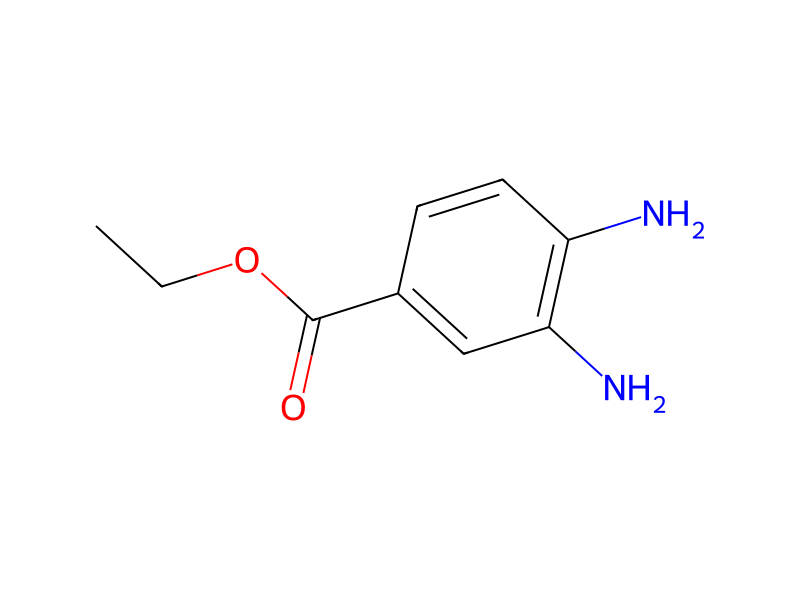
Product 1

Reagents, catalysts & solvents 1

Procedure
Ethyl 3,4-diaminobenzoate (500 mg, 2.77 mmol) and diacetyl (238 mg, 2.77 mmol) were dissolved in ethanol (20 ml), and the mixture was heated under reflux. One hour after, diacetyl (30 mg) was added thereto, and the mixture was heated under reflux. After the mixture was heated under reflux for 2.5 hours in total, the reaction solution was poured into water, and the precipitate was separated by filtration and washed with water. By through circulation drying for 15 hours, the title compound (650 mg, quantitative) as a light-brown powder was obtained.
Workup
- temperaturethe mixture was heated
- temperatureunder reflux
- additionOne hour after, diacetyl (30 mg) was added
- temperaturethe mixture was heated
- temperatureunder reflux
- temperatureAfter the mixture was heated
- temperatureunder reflux for 2.5 hours in total, the reaction solution
- customthe precipitate was separated by filtration
- washwashed with water
- customBy through circulation drying for 15 hours
Sources & evidence
- ORD record
- ord-f07b1b93eab54beaad10684964d97d1c
- Source dataset
- uspto-grants-2015_12
- Patent number
- US09200008B2
Reaction notes
Loading…