1,5,5-Trimethyl-2-pyrrolidinone → HCID 70925591, compound
Reaction equation

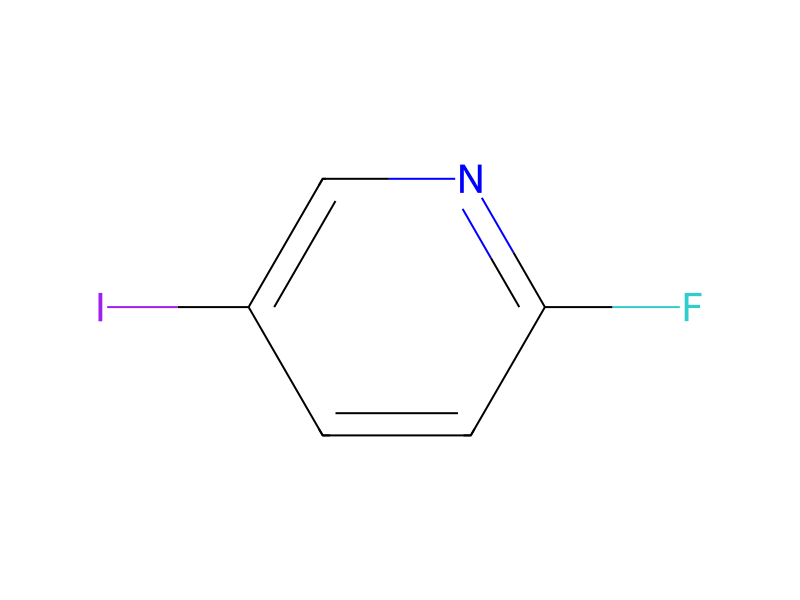
F[C:2]1[CH:7]=[CH:6][C:5]([I:8])=[CH:4][N:3]=1.[CH3:9][N:10]1[C:14]([CH3:16])([CH3:15])[CH2:13][CH2:12][C:11]1=[O:17]>C1(C)C=CC=CC=1>[I:8][C:5]1[CH:6]=[CH:7][C:2]([CH:12]2[CH2:13][C:14]([CH3:16])([CH3:15])[N:10]([CH3:9])[C:11]2=[O:17])=[N:3][CH:4]=1Participants
Reactant 2

Product 1

Reagents, catalysts & solvents 1

Conditions
- Temperature
- -4 °C
Procedure
A solution of 2-fluoro-5-iodopyridine (260 mg, 1.17 mmol) and 1,5,5-trimethyl-pyrrolidin-2-one (148 mg, 1.17 mmol) in 6 ml of dry toluene was purged with Argon and cooled to −4° C. A 1M solution of sodium hexamethyldisilylamide (NaHMDS) in toluene (2.33 ml, 2.33 mmol) was added dropwise maintaining the temperature below 0° C. The red solution was stirred for 2 h at 0° C., quenched by addition of 5 ml of saturated ammonium chloride solution. After extraction with ethyl acetate/water, drying over sodium sulfate and concentration; the residue (400 mg) was taken up in ethyl acetate, adsorbed onto 5 g of silicagel which was loaded onto a 20 g prepacked flash chromato-graphy column. After elution with a 0% to 75% ethyl acetate in heptane gradient, the fractions containing the desired product were collected to yield 145 mg (38%) of the title compound as a yellow viscous oil, MS: m/e=331.0 (M+H+).
Workup
- temperaturemaintaining the temperature below 0° C
- customquenched by addition of 5 ml of saturated ammonium chloride solution
- extractionAfter extraction with ethyl acetate/water
- dry with materialdrying over sodium sulfate and concentration
- washAfter elution with a 0% to 75% ethyl acetate in heptane gradient
- additionthe fractions containing the desired product
- customwere collected
Sources & evidence
- ORD record
- ord-30d43ccb310f43d9a42411b2af95e426
- Source dataset
- uspto-grants-2015_12
- Patent number
- US09212171B2
Reaction notes
Loading…